Competitive Pricing
Our prices are competitive, and we offer flexible pricing options and discounts to ensure that our customers are satisfied.
Experienced Team
Our team consists of experienced professionals with the expertise needed to meet the specific needs of our customers.
Global Presence
We have a strong global presence, with offices in various locations, enabling us to offer our services to customers worldwide.
Sustainable Development
We are committed to promoting sustainable development by working with manufacturers and suppliers who meet our ethical and environmental standards.
Bearing steel is a high carbon steel that is designed to provide high hardness and wear resistance to bearings and other rotating parts. It typically contains 1% carbon and alloying elements such as chromium, manganese, and silicon that provide properties such as toughness, fatigue resistance, and corrosion resistance. Bearing steel is used in a wide range of applications including automotive and industrial machinery, aerospace and defense, and power generation equipment. The most commonly used grades of bearing steel include AISI 52100, AISI 8620, and AISI 440C.


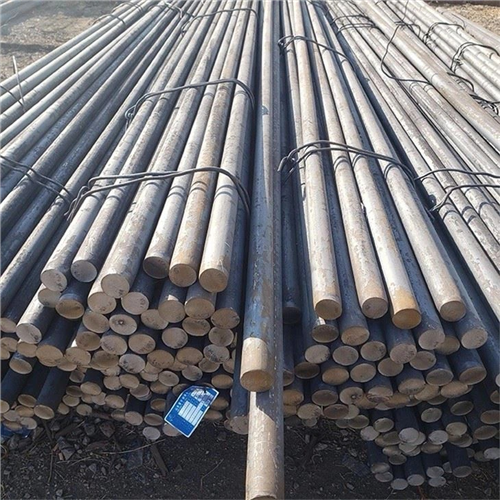


High Mechanical Properties: Bearing steel is known for its exceptional strength, hardness, toughness, and wear resistance. It can withstand high stress, heavy loads, and high temperatures without deforming or breaking.
Durability and Longevity: Bearing steel has a high resistance to wear, corrosion, and fatigue, making it ideal for long-term use. Due to its long lifespan, it can withstand intense use without needing frequent replacement, reducing maintenance costs, and downtime.
Versatility and Compatibility: Bearing steel is widely used in various applications, including automotive, aerospace, industrial, and agricultural industries. It is compatible with various lubricants and can work in different operating conditions.
Consistency and Reliability: Bearing steel's consistent and reliable performance has made it an industry standard for high-performance bearings. It can hold tight tolerances, enabling it to create precision parts for critical applications.
Cost-Effective: Bearing steel's exceptional mechanical properties, durability, and longevity make it a cost-effective option in the long run. The longer lifespan means that changes and replacements are less frequent, reducing the overall expenses.
High carbon chromium bearing steel
This type of bearing steel has high carbon content and chromium for increased hardness and wear resistance.
Martensitic stainless bearing steel
This type of bearing steel has high chromium and carbon content for increased toughness, wear resistance and corrosion resistance.
Austenitic stainless bearing steel
This type of bearing steel contains a high percentage of nickel and chromium for high corrosion resistance and toughness.
Carbon bearing steel
This type of bearing steel has a lower carbon content, making it easier to machine and form, but also lower in wear resistance.
Shot-bearing steel
This type of bearing steel is specially designed for ball bearings and has a high carbon and chromium content for good wear resistance and hardness.
High-speed steel
This type of bearing steel is designed for high-speed applications, such as machine tools, and has a high content of tungsten, molybdenum, and cobalt for increased toughness and wear resistance.
Bearings: Bearing steel is the most popular material for manufacturing bearings. The high-quality steel is used to make bearings that can carry high loads and operate at high speeds with low friction.
Automotive industry: Bearing steel is used in the automotive industry to manufacture various components such as gears, crankshafts, roller bearings, and others. It is particularly used in transmission systems, engines and wheels.
Aerospace industry: Bearing steel is used in the aerospace industry to manufacture components such as turbine blades, shafts, and bearings. These components are critical because of their high-speed operation and extreme conditions in which they operate.
Wind turbines: Wind energy is one of the fastest-growing sources of power, and bearing steel plays a crucial role in the design and manufacturing of components used in wind turbines, due to its ability to endure the overloads.
Machine tools: Bearing steel is used in machine tools to manufacture components such as spindles and ball bearings that require high precision and accuracy to function effectively.
Medical equipment: Bearing steel is used in the manufacture of medical equipment such as surgical tools and dental drills. The material is ideal for these applications due to its high wear resistance, durability, and strength.
Railways: Bearing steel is used in the railway industry to manufacture various components such as axles, wheelsets, and bogies to withstand different terrains and extreme conditions with prolonged use.
High contact fatigue strength
Contact fatigue damage is the main form of normal bearing damage. When a rolling bearing is running, the rolling elements roll between the raceways of the inner and outer rings of the bearing. The contact parts are subjected to periodic alternating loads, which can reach hundreds of thousands of times per minute. Under the repeated action of periodic alternating stress, the contact surface Fatigue peeling occurs. Once the rolling bearing begins to peel off, it will cause the bearing to vibrate, increase noise, and the operating temperature to rise sharply, causing the bearing to eventually be damaged. This form of damage is called contact fatigue damage. Therefore, the steel for rolling bearings is required to have high contact fatigue strength.
High wear resistance
When rolling bearings work normally, in addition to rolling friction, there is also sliding friction. The main parts where sliding friction occurs are: the contact surface between the rolling element and the raceway, the contact surface between the rolling element and the cage pocket, the cage and the ferrule guide rib, and the roller end surface and the ferrule guide. Wait between the sides. The existence of sliding friction in rolling bearings inevitably causes wear of bearing parts. If the wear resistance of the bearing steel is poor, the rolling bearing will lose precision prematurely due to wear or the rotation accuracy will decrease, resulting in increased vibration and reduced service life of the bearing. Therefore, bearing steel is required to have high wear resistance.
High elastic limit
When the rolling bearing is working, since the contact area between the rolling element and the ring raceway is very small, when the bearing is bearing load, especially when bearing a large load, the contact pressure on the contact surface is very large. In order to prevent excessive plastic deformation from occurring under high contact stress, resulting in loss of bearing accuracy or occurrence of surface cracks, the bearing steel is required to have a high elastic limit.
Four appropriate hardness
Suitable hardness
Hardness is one of the important indicators of rolling bearings. It is closely related to the material contact fatigue strength, wear resistance, and elastic limit, and directly affects the life of the rolling bearing. The hardness of the bearing is usually determined based on the way and size of the load the bearing bears, the overall size of the bearing, and the wall thickness. The hardness of the steel used for rolling bearings must be appropriate. If it is too large or too small, it will affect the service life of the bearing. As we all know, the main failure forms of rolling bearings are contact fatigue damage, and loss of bearing accuracy due to poor wear resistance or dimensional instability; if the bearing parts lack a certain toughness, they will suffer from brittle fracture when subjected to large impact loads. Bearing damage. Therefore, the hardness of the bearing must be determined based on the specific conditions of the bearing and the mode of damage. For bearing accuracy loss due to fatigue spalling or poor wear resistance, bearing parts should be selected with higher hardness; for bearings that bear larger impact loads (such as rolling mill bearings, railway bearings and some automobile bearings, etc.), the hardness should be appropriately reduced. Hardness is necessary to improve the toughness of the bearing.
Good impact toughness
Many rolling bearings will be subject to certain impact loads during use, so the bearing steel is required to have a certain degree of toughness to ensure that the bearings are not damaged by impact. For bearings that bear large impact loads, such as rolling mill bearings and railway bearings, materials are required to have relatively high impact toughness and fracture toughness. Some of these bearings use bainite quenching heat treatment process, and some use carburizing steel materials, just to These bearings are guaranteed to have good impact resistance toughness.
Good dimensional stability
Rolling bearings are precision mechanical parts, and their accuracy is measured in microns. During long-term storage and use, changes in the internal structure or stress will cause changes in the bearing size, causing the bearing to lose accuracy. Therefore, in order to ensure the dimensional accuracy of the bearing, the bearing steel should have good dimensional stability.
Good anti-rust performance
Rolling bearings have many production processes and a long production cycle. Some semi-finished products or finished parts need to be stored for a long time before assembly. Therefore, bearing parts are prone to certain corrosion during the production process or during the storage of finished products, especially It’s in humid air. Therefore, bearing steel is required to have good anti-rust properties.
Good process performance
During the production process of rolling bearings, their parts undergo multiple cold and hot processing processes. This requires that bearing steel should have good process properties, such as cold and hot forming properties, cutting and grinding properties, heat treatment properties, etc., to meet the needs of large-volume, high-efficiency, low-cost and high-quality production of rolling bearings.
Annealing
●Complete annealing and isothermal annealing: Complete annealing is also called recrystallization annealing, generally referred to as annealing. This annealing is mainly used for castings, forgings and hot-rolled profiles of various carbon steels and alloy steels with hypoeutectoid composition, and sometimes Also used in welded structures. It is generally used as the final heat treatment of some unimportant workpieces, or as the pre-heat treatment of some workpieces.
● Spheroidizing annealing: Spheroidizing annealing is mainly used for hypereutectoid carbon steel and alloy tool steel (such as steel types used in manufacturing cutting tools, measuring tools, and molds). Its main purpose is to reduce hardness, improve machinability, and prepare for subsequent quenching.
●Stress relief annealing: Stress relief annealing is also called low-temperature annealing (or high-temperature tempering). This kind of annealing is mainly used to eliminate residual stress in castings, forgings, welding parts, hot-rolled parts, cold-drawn parts, etc. If these stresses are not eliminated, it will cause the steel parts to deform or crack after a certain period of time or during subsequent cutting processes.
Quenching
In order to improve the hardness, the main methods are heating, heat preservation and rapid cooling. The most commonly used cooling media are brine, water and oil. The workpiece quenched in salt water is easy to obtain high hardness and smooth surface, and is not prone to soft spots that are not quenched, but it is easy to cause serious deformation of the workpiece and even cracking. The use of oil as the quenching medium is only suitable for quenching some alloy steels or small-sized carbon steel workpieces where the stability of supercooled austenite is relatively large.
Tempering
● Reduce brittleness and eliminate or reduce internal stress. After quenching, steel parts will have great internal stress and brittleness. If they are not tempered in time, the steel parts will often deform or even crack.
● Obtain the mechanical properties required by the workpiece. After quenching, the workpiece has high hardness and high brittleness. In order to meet the different performance requirements of various workpieces, the hardness can be adjusted through appropriate tempering to reduce the brittleness and obtain the required Toughness, plasticity.
● Stable workpiece size
● For some alloy steels that are difficult to soften by annealing, high-temperature tempering is often used after quenching (or normalizing) to properly gather carbides in the steel and reduce the hardness to facilitate cutting.
Keep the bearing steel lubricated
Without proper lubrication, bearing steel can experience excessive wear and tear, leading to premature failure. Use the right type of lubricant and follow the manufacturer's recommendations for oil changes or greasing intervals.
Protect the bearing steel from contamination
Dirt, debris, and moisture can all damage your bearing steel over time. Keep the area around the bearing clean and use proper seals and covers to keep contaminants out.
Monitor the bearing steel for signs of damage
Regular inspections can help you catch issues early on. Look for signs of rust, corrosion, friction, or noise, and address these issues as soon as possible.
Store the bearing steel properly
When not in use, store your bearing steel in a clean, dry, and temperature-controlled environment. Avoid storing the steel near chemicals or other materials that could cause damage.
Handle the bearing steel with care
When installing or removing bearings, handle them gently and avoid excessive force or impact. Use proper tools and follow recommended procedures to prevent damage.
Gnee Steel (tianjin) Co., Ltd was established in 2008 and is located in the North China Steel Market, China's largest steel distribution center. We are a comprehensive company integrating steel trading, processing, distribution and service.
As an ISO 9001,SGS certified company. With many years of manufacturing and exporting experience, we have been serving our customers and projects in South America, Southeast Asia, Central Asia, Middle East, Africa and North Europe market.
Q: What is bearing steel made of?
Q: Does bearing steel rust?
Q: What is the difference between bearing steel and stainless steel?
Q: How long do steel bearings last?
Q: What is bearing steel used for?
Q: How much carbon does a bearing steel typically contain?
Q: How hard is bearing steel?
Q: What is 52100 bearing steel equivalent to?
Q: Is bearing steel weldable?
Q: What is bearing steel?
Q: What are the properties of bearing steel?
Q: What are the common grades of bearing steel?
Q: How is bearing steel manufactured?
Q: What are the applications of bearing steel?
Q: How is bearing steel different from other types of steel?
Q: What are the main components of bearing steel?
Q: What are the advantages of using bearing steel?
Q: How is bearing steel produced?
Q: What are some common uses for bearing steel?
Q: Is bearing steel magnetic?
As one of the most professional bearing steel manufacturers and suppliers in China, we're featured by good service and competitive price. Please rest assured to buy high quality bearing steel for sale here from our factory. Contact us for pricelist and free sample.
(0/10)

