
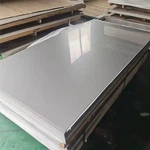
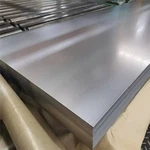


The surface of the raw material continuously cold coil is a small piece of overlapping thin layer that is not exfoliated and presents a mountain-like or line-like shape.
perforation
The material has holes.
1 The material contains non-metallic inclusions. When cold rolling, the local tensile strength exceeds the limit, so that the material is partially broken to form holes;
Edge rupture
The edges of theraw material continuously cold coil are cracked and penetrate deep into the inside of the steel strip in the width direction.
The thinner the raw material continuously cold coil, the easier it is to form this defect.
Trimming
Traces after clipping due to edge cracking.
Transport damage
The raw material continuously cold coil occurs mostly at the edge of the steel strip due to the damage formed during the lifting process.
Bruise
1 friction between the raw material continuously cold coiland other objects (such as rollers) or short strip scratches caused by poor interlaminar friction of the steel strip, and scratches caused by friction of the steel strip with the graphite roller or wool felt during annealing;
2 The hook strip shape appears continuously along the rolling direction of the steel strip. In the case where the re-rolled material is not padded, the defect is more likely to occur.
Roll printing
Periodic pits or convex hulls appear on the surface, and severe roll marks cause the strip to pass through.
1The strip weld is too high or the cleaning is uneven, causing the sticking roller when rolling; 2The hard metal (bead, metal scrap, etc.) or dirt is stuck on the roller. When rolling or leveling, the hard object or the dirt is pressed. On the surface of the strip, leaving an indentation;
3 work rolls off the meat.
Embossing
The surface of the surface is concave at a certain depth, one side is convex, there are traces of pitch, there are periodicity, some are different, and the color of the defect is brighter.
1 During the production process, a variety of auxiliary rolls (tension rolls, pinch rolls, pinch rolls, straightening rolls, etc.) are stuck with iron filings, which are caused by dirt;
2 Iron filings and foreign matter fall into the steel plate.
Scratch
1 The steel strip is scratched by a hard object during cold rolling, usually in the form of strips, and parallel to the rolling direction. If the degree is serious, the groove can be felt by hand;
The steel strip is scratched due to the inclusion of hard objects in the wool felt of the annealing furnace.
Chisel
There are meteor-like distributions on the surface of the steel strip that are sharp, short and deep inside the steel strip. The distribution is uneven and rough, with protrusions.
Weld mark
When the joint of the welding lead tape is wound into a steel coil, the full width linear trace of the weld bead on the surface of the steel strip is generally increased gradually, and the degree is gradually reduced.
| Proof strength Rp0.2 (MPa) | Tensile strength Rm (MPa) | Impact energy KV (J) | Elongation at fracture A(%) | Reduction in cross section on fracture Z(%) | As-Heat-Treated Condition | Brinell hardness (HBW) |
|---|---|---|---|---|---|---|
| 882 (≥) | 192 (≥) | 13 | 12 | 21 | Solution and Aging, Annealing, Ausaging, Q+T,etc | 121 |
Due to the roll change, the stop roller has a straight line of full width left on the surface of the steel strip, and generally the thickness of the front and rear will be too large.
Graphite roll mark
Sometimes raw material continuously cold coil is black, sometimes white, strip or wavy, and sometimes blocky. Some touch it by hand and there will be powder on the hand.
Traces produced by the contact of the graphite roll of the heat treatment furnace with the steel strip.


Hot Tags: raw material continuously cold coil, China, suppliers, manufacturers, factory, buy, price, pricelist, for sale, in stock, free sample, SPCD Cold Rolled Steel Sheet, Cold Drawn Carbon Steel, Cold rolled Steel Sheet, SPCC Cold Rolled Steel, Cold Rolled Steel Strips, Cold Rolled Steel Coils


