
With the development of modern car technology, in the modern automobile manufacturing industry, body steel plates generally use thin steel plates with a thickness of 0.6~1.5mm. Most of the steel plates encountered in body repair are low carbon steel. In order to reduce the weight of the car, ultra-high-carbon steel plates are gradually used. High-strength steel, high-strength steel, high-strength low-alloy steel, etc., hot-dip galvanized steel sheets are also widely used for certain components, especially those subject to corrosion. Car materials require both considerable strength and light weight. Using aluminum alloy body materials is a way out, since aluminum is lighter than steel. However, the processing cost of aluminum materials is high, and the stamping and welding technology requirements are relatively special. With the current technology, it is not possible for ordinary manufacturers to do it. Therefore, in addition to aluminum alloys, will there be new materials for automobile body materials?

Galvanized steel
With the development of the automobile industry, galvanized steel sheets are widely used in order to improve the service life of the car body and enhance the corrosion resistance of the car body material. Since the resistance spot welding method is currently mainly used in automobile body manufacturing, compared with uncoated steel plates, there are still some problems in the spot welding process of galvanized steel plates: the zinc layer that melts before the steel plate forms a zinc ring and shunts the flow, causing the welding The current density is reduced; the surface of the zinc layer is burned and contaminates the electrode, which reduces the life of the electrode; the resistivity of the zinc layer is low and the contact resistance is small; defects such as welding spatter, cracks, and pores are prone to occur.
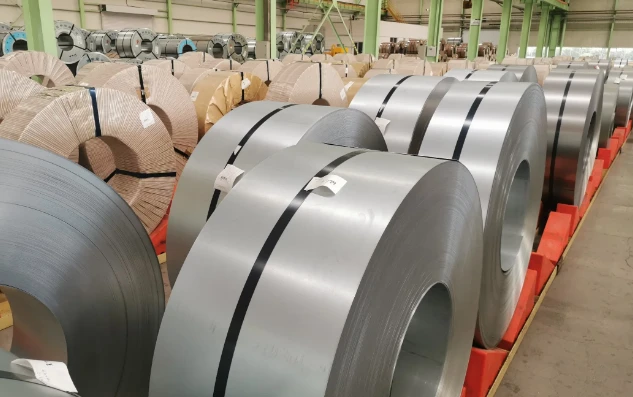
Cold rolled steel plate and hot rolled steel plate
The difference between cold rolled plates and hot rolled plates is reflected in many aspects. First, their manufacturing processes and materials are different. Hot-rolled plates usually use low carbon steel or alloy steel as raw materials, and are rolled after being heated to high temperatures. Cold-rolled plates, on the other hand, roll steel plates at room temperature, mainly using low-carbon steel as raw material. Secondly, the surface accuracy and smoothness of cold-rolled plates and hot-rolled plates are different.
Hot-rolled steel plate: above 800°C, 1.6-8 mm, high-strength steel plate, used for high-strength parts, such as car bodies, beams, and longitudinal beams. Car interior steel plates and chassis parts.
Cold-rolled steel plate: low temperature, 0.4-1.4 mm, widely used in integrated vehicle bodies. Cold-rolled thin steel plate is the abbreviation of ordinary carbon structural steel cold-rolled plate. It is also called cold-rolled plate, commonly known as cold plate, and is sometimes mistakenly written as cold-rolled plate. Cold plate is made of ordinary carbon structural steel hot-rolled steel strip, which is further cold-rolled into a steel plate with a thickness of less than 4mm. Since rolling at room temperature does not produce iron oxide scale, the cold plate has good surface quality and high dimensional accuracy. Coupled with annealing treatment, its mechanical properties and process performance are better than hot-rolled thin steel plates. In many fields, especially In the field of home appliance manufacturing, it has gradually been used to replace hot-rolled thin steel plates. The main varieties of low-alloy high-strength steel plates include phosphorus-containing cold-rolled steel plates, bake-hardened cold-rolled steel plates, cold-rolled dual-phase steel plates and high-strength IF cold-rolled steel plates. Car body designers can customize the plate parts according to the stress conditions and complex shapes of the plate parts. Choose the type of steel plate according to the degree.


