
Galvanized steel plates
Looking for detailed chemical composition data of S350GD steel to ensure project compliance? You've come to the right place. As a direct steel factory with strict quality control, GNEE Steel provides EN 10346-compliant S350GD galvanized steel plates and in this guide, we'll break down every key element's content, role, and impact on performance. Whether you're verifying weldability or strength, this data helps you make informed decisions.
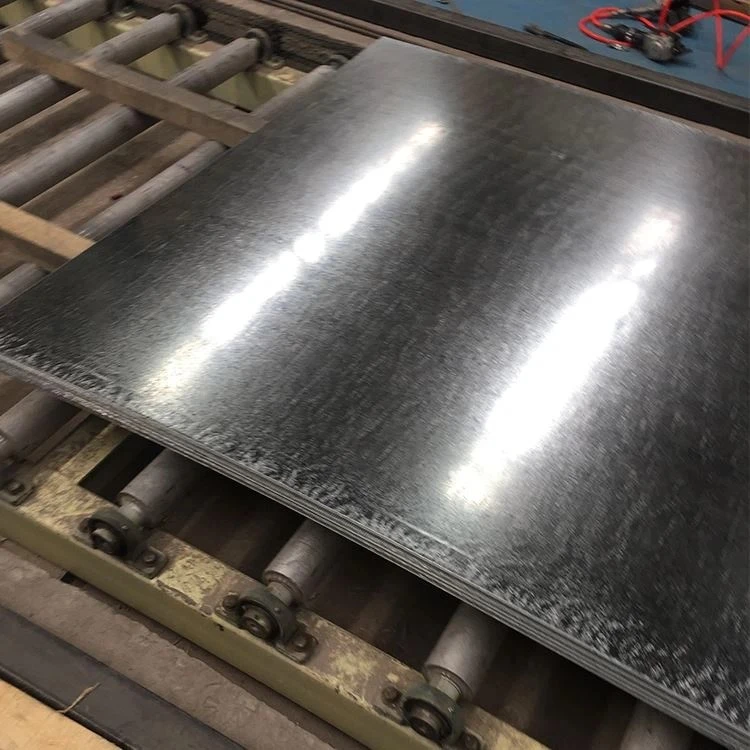
Galvanized steel plates
Galvanized steel is steel coated with zinc for corrosion resistance, with common grades like DX51D (general-use), S320GD (medium-strength), and S350GD (high-strength). S350GD stands out for structural applications, as its chemical composition is tailored to balance high yield strength (≥350MPa) and cold formability.
Every element in S350GD steel serves a purpose-from carbon boosting strength to aluminum improving coating adhesion. Understanding these components ensures you select the right material for load-bearing parts like construction beams or automotive chassis.
What Is S350GD?
Verified Chemical Composition (EN 10346)
|
Element
|
EN 10346 max (% by mass)
|
Role in the steel
|
|---|---|---|
|
Carbon (C)
|
0.20
|
Primary strength contributor; held below 0.20% to protect cold formability and weldability
|
|
Silicon (Si)
|
0.60
|
Deoxidation during melting; adds solid-solution strength
|
|
Manganese (Mn)
|
1.70
|
Strength and toughness; compensates for the strength lost by limiting carbon
|
|
Phosphorus (P)
|
0.10
|
Impurity; kept low to avoid brittleness
|
|
Sulfur (S)
|
0.045
|
Impurity; kept low to avoid hot shortness during welding
|
|
Aluminum (Al)
|
not specified
|
EN 10346 sets no Al limit for S350GD; mill practices vary
|
|
Iron (Fe)
|
balance
|
-
|
Mechanical Properties (Longitudinal, EN 10346)
|
Thickness t (mm)
|
Yield ReH / Rp0.2 min (MPa)
|
Tensile Rm min (MPa)
|
Elongation A80 min (%)
|
|---|---|---|---|
|
t > 0.70
|
350
|
420
|
16
|
|
0.50 < t ≤ 0.70
|
350
|
420
|
14
|
|
0.35 < t ≤ 0.50
|
350
|
420
|
12
|
|
t ≤ 0.35
|
350
|
420
|
9
|
Coating Options and Coating Masses
|
Coating type
|
Composition
|
Typical coating masses (g/m²)
|
|---|---|---|
|
+Z
|
zinc
|
100 / 140 / 200 / 275 / 350 (roofing standard: Z275)
|
|
+ZF
|
zinc-iron (galvannealed)
|
100 / 140
|
|
+ZA
|
zinc-aluminium (Galfan)
|
95 / 130 / 185 / 200 / 255 / 300
|
|
+AZ
|
aluminium-zinc (Galvalume)
|
100 / 150 / 185 (e.g., AZ150)
|
|
+AS
|
aluminium-silicon
|
60 / 80 / 100 / 150
|
Role of Each Element (Why the Limits Exist)
How to Verify Before You Order
S350GD vs Other Galvanized Grades
Standard Chemical Composition of S350GD Galvanized Steel
GNEE Steel's S350GD galvanized steel strictly follows EN 10346 standards, with each element's content controlled within precise ranges to guarantee performance. The table below details the standard composition:
| Element | Content Range (%) | EN 10346 Maximum/Minimum Requirement | GNEE Steel Typical Value (%) |
|---|---|---|---|
| Carbon (C) | ≤0.12 | Maximum 0.12 | 0.08-0.11 |
| Manganese (Mn) | ≤1.60 | Maximum 1.60 | 1.20-1.50 |
| Phosphorus (P) | ≤0.035 | Maximum 0.035 | 0.020-0.030 |
| Sulfur (S) | ≤0.030 | Maximum 0.030 | 0.010-0.020 |
| Silicon (Si) | ≤0.50 | Maximum 0.50 | 0.20-0.40 |
| Aluminum (Al) | ≥0.020 | Minimum 0.020 | 0.025-0.050 |
| Iron (Fe) | Balance | N/A | 97.80-98.40 |
All batches come with a mill test certificate (MTC) listing actual element contents, ensuring traceability and compliance with your project's quality requirements.
Role of Each Element in S350GD Galvanized Steel
Each element in S350GD steel directly influences its mechanical properties and usability-here's how they work:
1. Carbon (C): The Strength Foundation
Role: Carbon is the primary element boosting S350GD's yield strength. It forms strong bonds with iron, enhancing the material's ability to withstand loads.
Control Reason: Keeping carbon ≤0.12% prevents excessive brittleness, which would make the steel crack during cold forming (e.g., bending or stamping).
Impact on Use: Ensures S350GD can handle structural loads without sacrificing processability-critical for beams and chassis.
2. Manganese (Mn): Toughness Enhancer
Role: Manganese improves tensile strength and toughness, helping S350GD resist impacts (e.g., storm forces on coastal buildings).
Control Reason: Limiting Mn to ≤1.60% avoids reducing weldability-high manganese levels can cause weld cracks.
Impact on Use: Makes S350GD suitable for dynamic load scenarios, like automotive frames handling road vibrations.
3. Phosphorus (P) & Sulfur (S): Harmful Elements to Minimize
Role: Both elements are impurities that harm performance. Phosphorus increases brittleness (especially at low temperatures), while sulfur causes "hot shortness" (cracking during welding).
Control Reason: Strict limits (P≤0.035%, S≤0.030%) prevent structural failures in cold or high-heat processing.
Impact on Use: Ensures S350GD maintains reliability in harsh environments, from freezing winters to industrial welding.
4. Silicon (Si): Strength & Coating Helper
Role: Silicon boosts strength and improves the adhesion of the zinc coating (key for galvanized steel). It also helps during steel production by removing oxygen.
Control Reason: Capping Si at ≤0.50% avoids reducing formability-too much silicon makes the steel hard to bend.
Impact on Use: Extends the service life of S350GD galvanized steel by ensuring the zinc coating doesn't peel.
5. Aluminum (Al): Grain Refiner
Role: Aluminum refines the steel's grain structure, making mechanical properties (like strength and elongation) more uniform across the plate.
Control Reason: Requiring Al≥0.020% guarantees consistent performance-smaller grains mean better toughness.
Impact on Use: Ensures every part of the S350GD plate performs the same, critical for large structural components like roof trusses.
How Chemical Composition Affects S350GD's Mechanical Properties
The chemical composition directly determines S350GD's mechanical performance-here's the link between elements and key properties (using GNEE Steel's typical values):
| Mechanical Property | Target Value | Key Elements Influencing It | How Elements Contribute |
|---|---|---|---|
| Yield Strength | ≥350MPa | C, Mn, Si | C and Mn form strong bonds; Si enhances strength |
| Tensile Strength | 410-550MPa | C, Mn | Mn boosts tensile capacity; controlled C prevents brittleness |
| Elongation | ≥17% | P, S, Al | Low P/S reduce brittleness; Al refines grains for better ductility |
| Impact Energy (0℃) | ≥27J | P, Al | Low P avoids cold brittleness; Al improves toughness |
For example: Our S350GD's typical C (0.08-0.11%) and Mn (1.20-1.50%) deliver a yield strength of 360-400MPa-exceeding the EN standard's 350MPa minimum-while low P/S ensures 18-22% elongation (better than the 17% requirement).
Chemical Composition vs. Other Galvanized Steel Grades
Comparing S350GD's composition to other grades shows why it's ideal for high-strength needs. The table below highlights key differences:
| Element | S350GD Galvanized Steel (%) | S320GD Galvanized Steel (%) | DX51D Galvanized Steel (%) |
|---|---|---|---|
| C | ≤0.12 | ≤0.12 | ≤0.12 |
| Mn | ≤1.60 | ≤1.40 | ≤0.60 |
| P | ≤0.035 | ≤0.035 | ≤0.045 |
| S | ≤0.030 | ≤0.030 | ≤0.045 |
| Si | ≤0.50 | ≤0.50 | ≤0.10 |
| Al | ≥0.020 | ≥0.020 | ≥0.020 |
Key takeaway: S350GD has higher Mn and Si than DX51D (general-use) and S320GD (medium-strength), which is why it delivers superior strength-making it the top choice for heavy-load structural projects.
The chemical composition of S350GD galvanized steel is carefully engineered to balance strength, formability, and corrosion resistance-each element plays a critical role in meeting EN 10346 standards and your project's needs. GNEE Steel's strict control of elements like C, Mn, and P ensures consistent, reliable performance for structural applications.
If you need to verify the chemical composition of S350GD for your project, or require a custom batch with adjusted elements (where standards allow), our team is ready to help. Contact GNEE Steel now to request a sample MTC, get a quotation for S350GD galvanized steel plates, or discuss your specific composition requirements!
Get your 2026 factory price list + landing cost calculator
FAQ
Q1: Is S350GD weldable?
A: Yes - continuously coated structural steels are weldable with conventional methods; remove the coating at the weld zone and ventilate the zinc fumes.
Q2: Is 1.0529 the same as S350GD?
A: Yes, 1.0529 is the EN material number of S350GD.
Q3: Does EN 10346 require impact energy for S350GD?
A: No; claims of a standard "27 J at 0 °C" are not from the standard.
Q4: What thickness range is S350GD available in?
A: Mills typically supply 0.50–3.00 mm (SSAB); confirm with your supplier.
Q5: How do I verify a supplier's S350GD data?
A: Compare against EN 10346 limits and the lot's EN 10204 3.1 MTC - never against marketing tables.


