
1 Time limit:
SPCC, SPCD boards and 08F boards can be stored for 8 days after being flattened; SPCE and 08A1 boards can be stored for 6 months after being flattened without stamping slip lines, that is, bulge lines.
2 Timeliness mechanism:
There is an obvious yield plateau on the tensile curve of annealed or aged mild steel. This will appear as a slip line that damages the appearance during stamping and forming. When the deformation exceeds the yield plateau, the slip lines disappear and the plate surface becomes slightly rough. Therefore, after cold rolling and annealing, low carbon steel plates for stamping must be tempered and rolled so that their deformation exceeds the yield platform to prevent slip lines from occurring during stamping.

3 Elimination of timeliness:
For boiled steel plates containing dissolved nitrogen, if a period of time passes from temper rolling to stamping processing, the so-called strain aging phenomenon will occur, a yield plateau will appear again, and slip lines will also occur.
For stamping processing plants or stamping workshops, the sheet metal is slightly and repeatedly bent in two directions by smooth rolling or on a sheet metal straightening machine with staggered roller configurations, so that the sheet material gets a small cold deformation (3%). This can eliminate the above phenomenon. However, the effect is temporary, and even after only a few days, the mechanical properties will change significantly. Therefore, the sheet metal pass rolling process should be carried out directly before stamping.
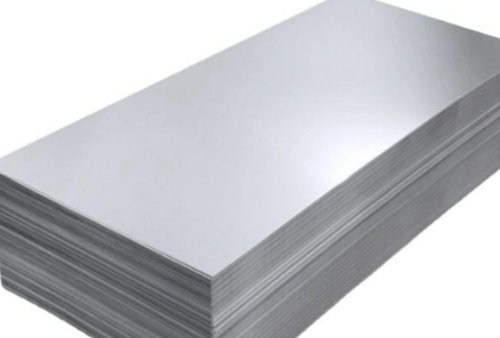
Aluminum-killed steel, such as 08A1, is non-effective steel. After appropriate tempering and rolling, its tensile curve is smooth, no yield platform is allowed, and insignificant bending is allowed. Its mechanical properties will hardly change due to aging. And change, so there will be no slip lines during stamping.


