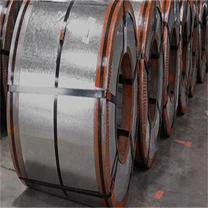
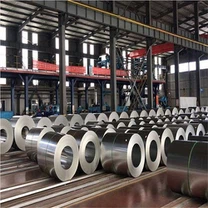
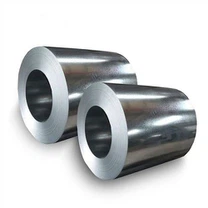
Enamel steel plays a very important role in the national economy. Compared with ordinary steel, enameled steel has good corrosion resistance; compared with stainless steel, enameled steel has obvious advantages in production cost and aspect, and is often used to make kitchen utensils, Sanitary ware, barbecue stove water heater liner, building decorative panels and chemical reaction tanks, etc. The domestic market demand is 200,000/a.
1. Conventional types: There are many types of enamel steel plates. According to the production process, they can be divided into hot-rolled pickled plates, cold-rolled plates and cladding plates. According to the enamel technology, they can be divided into primary enamel and secondary enamel, single-sided enamel and double-sided enamel. Surface enamel, wet enamel and electrostatic dry powder enamel, etc.; according to the forming performance, it can be divided into CQ (commercial grade), DQ (ordinary stamping grade), DDQ (deep drawing grade) and EDDQ (extra deep drawing grade), etc.; according to the strength, it can be divided into Divided into 245, 330MPa, etc.

2. Material type:
Commonly used ceramic steel materials have gone through several processes from using boiled steel, aluminum-killed steel, decarburized aluminum-killed steel to ultra-low carbon steel.
The current development of the enamel industry requires an enamel steel that has both ultra-deep drawing performance and excellent scale resistance and surface quality. This has become one of the hot spots in the development of the steel industry, that is, cold-rolled deep-drawing enamel steel.
The composition of cold-rolled deep-drawing enamel steel is based on traditional I (interstitial-free steel) steel. By adding an appropriate amount, it can form a coarse second phase and coarsely precipitate during hot rolling and cold rolling to improve the scale resistance of the steel plate. performance. The process flow of cold-rolled enamel steel is molten iron pre-desulfurization, converter re-blowing, LF furnace refining, R refining, continuous casting, heating, rough rolling, finishing rolling, coiling, cold rolling, continuous annealing or bell annealing.
| The material | Mechanical properties | |||
| YS | TS(≥) | EL(≥) | ||
| DC03ED | ≤240 | 270-350 | ≥34 | |
| DC04ED | ≤210 | 270-350 | ≥38 | |
| DC06ED | ≤190 | 270-350 | ≥38 | |
| DC01EK | ≤270 | 270-390 | 30 | |
| DC04EK | ≤220 | 270-350 | 36 | |
| DC06EK | ≤190 | 270-350 | 38 | |
| BTC1 | ≤190 | 270-320 | ≥39 | |