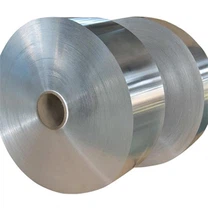
What Cold-Reduced Sheet Is and Where the Grade Family Fits
Cold-reduced steel sheet is produced by rolling hot-rolled coil at ambient temperature, which gives a smooth surface, accurate thickness and consistent mechanical properties, but also work-hardens the material. The product is then annealed to restore ductility and temper rolled to control the final properties and surface finish.
In the JIS G3141 system, the SPCC family covers cold-reduced carbon steel sheet and strip for general use, with the suffix indicating increasingly severe forming requirements: SPCC for commercial quality, SPCD for drawing quality, SPCE for deep drawing quality and SPCF for extra deep drawing quality. The same material appears in the European system under EN 10130 with designations from DC01 through DC06, in ASTM A1008 and A109 for commercial and structural cold-rolled product, and in the ISO 3574 designation series.
Chemistry Limits by Grade
The grade progression is achieved mainly through tighter control of carbon, manganese, phosphorus and sulphur, because these elements govern ductility, strain ageing and the uniformity of the forming response. Limits below follow the JIS G3141 requirements for the common grades.
| Grade | C max, % | Mn max, % | P max, % | S max, % | Quality |
|---|---|---|---|---|---|
| SPCC | 0.15 | 0.60 | 0.100 | 0.050 | Commercial |
| SPCD | 0.10 | 0.50 | 0.040 | 0.040 | Drawing |
| SPCE | 0.08 | 0.45 | 0.030 | 0.030 | Deep drawing |
| SPCF | 0.06 | 0.40 | 0.025 | 0.025 | Extra deep drawing |
Carbon is the strongest influence because it raises strength and reduces elongation; low carbon also improves the strain-ageing behaviour that determines whether a formed part will show stretcher strains after weeks in storage. Phosphorus increases strength at the cost of ductility, which is why the deep drawing grades cap it at 0.030 % or lower, and sulphur is restricted because sulphide inclusions act as crack initiation sites in heavily stretched parts.
Mechanical Properties and Forming Behaviour
Each grade is further subdivided into classes with their own tensile and elongation ranges, so the standard defines a window rather than a single value. The pattern across the family is consistent: as the drawing severity rises, the permitted tensile strength band narrows toward the lower end and the minimum elongation increases.
SPCC commercial quality typically shows tensile strength in the 270 to 410 MPa band with elongation minima in the region of 28 to 34 %, depending on thickness. It is suitable for bending, moderate drawing, roll forming and general fabrication.
SPCD drawing quality is specified with a narrower tensile band and higher elongation minima, giving the consistency needed for drawn components such as electrical housings and furniture parts.
SPCE deep drawing quality is specified nearer the 270 to 350 MPa band with elongation minima in the high thirties to low forties for the common 0.6 mm to 1.6 mm range, and is used for automotive interior and construction parts with demanding draw ratios.
SPCF extra deep drawing quality is reserved for the most severe forming, where forming limit curves rather than tensile values are the practical acceptance criterion.
Two points of practice follow. First, for drawing work the properties that matter - the strain hardening exponent and the plastic strain ratio measured in the rolling and transverse directions - are not always reported, and should be requested when the part is complex. Second, grade and class should be selected on the forming operation, not on price, because a cheaper commercial grade that splits in the die costs far more than the material saving.
Delivery Condition, Finish and Dimensions
Cold-reduced sheet is supplied in several conditions, and the condition is part of the specification.
Annealed and skin-passed, known as the normal condition, is the standard supply for forming and takes the mechanical properties defined in the grade tables.
Full hard is supplied unannealed and is both strong and brittle, used where flatness and strength matter more than formability.
Quarter hard, half hard and temper-rolled conditions sit between these two and are used for applications needing specific stiffness or a particular surface gloss.
Surface finish is designated either D for a dull, matte finish with controlled roughness or B for a bright finish, and appearance is graded from A, the most demanding, down to C. Thickness is commonly supplied from 0.25 mm to 3.2 mm, width up to about 1500 mm, in coils with 508 mm or 610 mm inside diameter or as cut sheets and blanks. Coils are normally oiled to prevent in-transit rust, and the oil type should be compatible with the customer's subsequent cleaning and painting process.
Processing, Storage and Quality Control
Stamping condition determines the results as much as material grade. Stamping speed and pressure must be controlled to avoid cracks, tearing and excessive thinning, and die clearance, lubrication and blankholder force should be set for the specific grade: a grade selected for a deep draw will not compensate for a die set up for a commercial-quality part.
Storage discipline matters because these grades are used for visible and functional parts. Sheet should be kept indoors, dry, away from acids, alkalis and other corrosive substances, and handled in first-in, first-out order to limit surface rust and edge damage. Coils stored on their sides in wet conditions will rust at the edges and along the wrap, and that damage cannot be recovered.
Verification of delivered material normally includes tensile testing to ASTM E8/E8M or ISO 6892-1, hardness testing, thickness and width measurement including thickness profile across the width, flatness and camber checks, surface roughness measurement where a finish is specified, and visual inspection for laminations, roll marks, scale and edge defects. A mill test certificate to EN 10204 3.1 with heat number traceability should accompany every delivery.
Note that dimensions and surface quality directly determine the performance of the finished part, while correct processing technique protects the property the grade was purchased for. Correcting a forming problem by moving to a higher drawing grade is only valid if the die and the press settings have already been checked, because a well-chosen grade processed with the wrong parameters will fail in the same way as a poor one.
Frequently Asked Questions
Q: What is the difference between SPCC, SPCD and SPCE?
A: They are JIS G3141 grades of increasing drawing quality. SPCC is commercial quality, SPCD is drawing quality and SPCE is deep drawing quality, with progressively tighter carbon, manganese, phosphorus and sulphur limits and better ductility.
Q: Is SPCC steel strong?
A: It is a general-purpose grade with typical tensile strength in the 270 to 410 MPa range. Strength is not its main purpose; formability and surface quality are, and where higher strength is needed a different grade family is used.
Q: What does the normal delivery condition mean?
A: Annealed and skin-passed. The coil has been annealed to restore ductility and temper rolled to control the surface and suppress stretcher strains, which is why it is the standard condition for forming.
Q: How should cold-reduced sheet be stored?
A: Indoors, dry, away from acids and alkalis, in first-in, first-out order. Edge rust and wrap rust from damp storage cannot be recovered by processing.
Q: What tests are performed on delivery?
A: Tensile testing to ASTM E8/E8M or ISO 6892-1, hardness, thickness and width measurement including profile across the width, flatness and camber checks, roughness where specified, and visual inspection. Certificates are issued to EN 10204 3.1.
Q: Which European grades correspond to the SPCC family?
A: EN 10130 designations DC01 to DC06 cover the comparable range from commercial quality to deep drawing quality, with ASTM A1008 and A109 covering the equivalent US product categories.