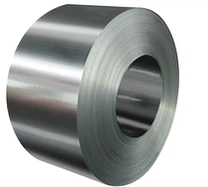
PPGL stands for pre-painted Galvalume steel, a coated product in which an aluminium-zinc alloy coated steel coil receives a primer and a top coat on a continuous paint line. The colour that arrives on site is therefore the colour of the cured paint film, not a dye applied after forming, and the range of standard colours available is what allows a single material to serve roofing, cladding, appliance housings and architectural facades at the same time.
What PPGL Means and Why the Substrate Matters
The key difference between PPGL and ordinary pre-painted galvanized steel lies in the substrate. Galvalume steel is coated with an aluminium-zinc alloy rather than pure zinc, and that coating is composed of about 55% aluminium, 43.4% zinc and a small amount of silicon. Compared with a pure zinc coating, the aluminium-zinc coating offers greater weather resistance and high temperature oxidation resistance, which makes it suitable for highly corrosive environments and for high-end architectural applications.
Production follows a fixed sequence. An annealed cold rolled steel coil is the starting point. The coil surface is cleaned and chromated, and the coil then passes through the coating pot to become a galvalume steel coil. A second chromate treatment cleans the coated surface again, after which a primer is applied to raise the adhesion of the top coating so that the paint does not flake off during cold roll forming. Finally the top coat, based on PE or PVDF, is applied and cured.
The Aluminium-Zinc Coating and Coating Mass
The coating under the paint is the first line of defence against corrosion. Its mass is specified by designation: AZ30-AZ160 for the aluminium-zinc coating, and Z50-Z140 g/m² where a zinc coating is preferred. A heavier coating is normally selected for coastal, industrial or high-humidity sites, and a lighter coating for sheltered inland service.
| Item | Value |
|---|---|
| Coating composition | About 55% aluminium, 43.4% zinc, small amount of silicon |
| Aluminium-zinc coating mass | AZ30-AZ160 |
| Zinc coating mass | Z50-Z140 g/m² |
| Paint top | 15-35 micron |
| Paint back | 5-10 micron |
Paint Build Up: Primer, Top Coat and Back Coat
Every PPGL coil carries a three-layer paint system. The primer bonds to the metallic coating and gives the system its forming tolerance. The top coat carries the colour, the gloss level and the exterior durability. The back coat protects the reverse face during handling, stacking and forming.
Top coats are based on PE or PVDF resin. PE systems give good formability and colour at moderate cost, while PVDF systems are selected where long-term colour and gloss retention under strong ultraviolet exposure is the priority. Whichever resin is chosen, the cured film thickness is normally between 15 and 35 micron on the top face and between 5 and 10 micron on the back face.
Standard Colors and Surface Finish
The standard colour range covers the finishes that dominate architectural and appliance work. Colour families are supplied in matt and satin finishes, and the common palette includes off-white, ivory and cream for facades, light and mid greys for industrial roofing, brick red, tile red and terracotta for pitched roofs and residential cladding, deep blue and green for commercial and municipal buildings, and near-black for modern architectural detailing.
The colours listed as standard examples are representative of the range rather than the limit of it. Colour can be matched to a customer sample or to an international colour system, which allows a project to keep a single colour across roofing, flashings, gutters and wall cladding even when these parts are produced from different substrates. Two practical points decide the result in service: darker colours reach higher surface temperatures in strong sunlight, and gloss level affects how visible dirt and handling marks become over time.
Specification, Grades and Supply
| Item | Value |
|---|---|
| Technical standard | EN 10147, EN 10142, DIN 17162, JIS G3302, ASTM A653 |
| Type | Coil, sheet, plate, strip |
| Thickness | From 0.12 mm, according to customer requirement |
| Width | 600-1500 mm, according to customer requirement |
| Steel grade | DX51D, DX52D, DX53D, DX54D, S220GD, S250GD, S280GD, S350GD, S550GD; SGCC, SGHC, SGCH, SGH340, SGH400, SGH440, SGH490, SGH540; SGCD1, SGCD2, SGCD3, SGC340, SGC490, SGC570; SQ CR22 (230), SQ CR22 (255), SQ CR40 (275), SQ CR50 (340), SQ CR80 (550); CQ, FS, DDS, EDDS |
| Surface treatment | Passivation, oiling, lacquer sealing, phosphating or untreated |
| Surface structure | Normal spangle, minimised spangle, spangle free |
| Coil weight | 3-20 metric ton per coil |
Packing is designed for sea transport: waterproof paper as the inner wrapping, galvanized or coated steel sheet as the outer wrap, side guard plates, and seven steel straps around the coil, or packing to the customer's own requirement. Grades from commercial quality through drawing quality to structural and high strength grades are covered, so the same colour can be delivered on a substrate chosen for the actual forming and load conditions of the part. PPGL coil is exported to Europe, Africa, Central Asia, Southeast Asia, the Middle East, South America and North America.
Frequently Asked Questions
Q: What is PPGL steel?
A: PPGL is pre-painted Galvalume steel, an aluminium-zinc alloy coated coil that receives a primer and a PE or PVDF top coat and is then supplied as coil, sheet, plate or strip.
Q: What is the composition of the Galvalume coating?
A: The coating is approximately 55% aluminium, 43.4% zinc and a small amount of silicon, which gives greater weather resistance and high temperature oxidation resistance than a pure zinc coating.
Q: What standard colours are available?
A: Standard matt and satin finishes include off-white, ivory, cream, light and mid grey, brick red, terracotta, deep blue, green and near-black, and colours can be matched to a sample or to an international colour system.
Q: Which top coat resin should I choose?
A: PE top coats offer good formability at moderate cost, while PVDF top coats are chosen where long-term colour and gloss retention under strong ultraviolet exposure matters most.
Q: What is the difference between the aluminium-zinc and the zinc coating option?
A: The aluminium-zinc coating is designated AZ30-AZ160 and the zinc coating Z50-Z140 g/m². The heavier the coating, the longer the protection in a corrosive environment.
Q: What paint thickness is standard?
A: Top paint is normally 15-35 micron and back paint 5-10 micron, and the primer layer underneath raises adhesion so the film resists cold roll forming.