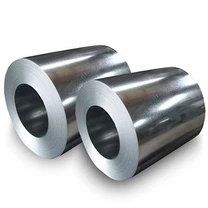
What Is Aluminum Foil?
Aluminum foil is a thin sheet of aluminum produced by hot rolling, cold rolling and finally foil rolling, followed by annealing. Commercial foil covers a gauge range of roughly 0.006 mm to 0.2 mm, that is 6 to 200 µm. Household foil is normally 0.010 mm to 0.024 mm thick: a standard roll is about 0.016 mm and heavy-duty foil about 0.024 mm. The most common alloys are 1235 with a minimum aluminum content of 99.35%, 8011 of the Al-Fe-Si family, 8079 and 3003.
Key engineering properties are a density of 2.70 g/cm³ and a melting point of 660.3 °C, combined with an excellent barrier against light, moisture, oxygen and odours. Foil is also a good thermal reflector and electrical conductor, and it is non-toxic and fully recyclable. Most packaging applications use the soft annealed O temper, produced by a final anneal after foil rolling.
Food wrap, trays and containers
Pharmaceutical cold-form blister foil
Cable shielding and transformer windings
Air-conditioner condenser fins
Lithium-battery pouch foil
Radiant-barrier insulation and honeycomb cores
What Was Tin Foil, and Why Did It Disappear?
True tin foil was a thin sheet of tin, and in the 19th century it was frequently a tin-lead alloy. Tin is denser at 7.31 g/cm³ and softer than aluminum, with a low melting point of 231.9 °C. From the late 19th century it was used to wrap chocolate, cigarettes and food.
Industrial aluminum foil production began around 1910 in Switzerland and spread to the United States during the 1910s and 1920s; household aluminum foil reached mass-market volumes in the late 1940s. Tin foil then disappeared from kitchens and food service within roughly a decade. The reasons were practical: aluminum foil was cheaper, far more malleable, and unlike tin foil it did not leave a metallic taste on food. The popular claim that tin foil was withdrawn purely because of toxicity oversimplifies the history: metallic tin has low acute toxicity, but 19th-century tin foil often contained lead, which is why food-contact tin foil raised genuine health concerns.
Aluminum Foil vs Tin Foil: Side-by-Side Comparison
| Parameter | Aluminum foil, today's standard | True tin foil, historical |
|---|---|---|
| Base metal | Aluminum alloys 1235, 8011, 8079, 3003 | Tin, often a tin-lead alloy in the 19th century |
| Density at 20 °C | 2.70 g/cm³ | 7.31 g/cm³ |
| Melting point | 660.3 °C | 231.9 °C |
| Typical thickness | 0.006-0.2 mm; household 0.010-0.024 mm | About 0.01-0.05 mm in historical production |
| Food-contact status | Established material under EU Regulation 1935/2004, the Council of Europe metals guideline CM/Res(2013)9, GB 4806.9-2016 and ASTM B479 | Not used today; metallic taste; historical lead content |
| Relative cost | Low, because bauxite is abundant | High, because tin ore is scarce |
| Status today | Standard packaging and industrial material | Obsolete; the term tin foil now means aluminum foil |
Food-Contact and Regulatory Notes
Aluminum foil is an accepted food-contact material in all major markets. The relevant frameworks are EU Regulation 1935/2004, which sets the general framework for food-contact materials, together with the Council of Europe guideline for metals and alloys CM/Res(2013)9; China GB 4806.9-2016 for metal materials and articles in contact with food; and ASTM B479, the specification for annealed aluminum foil used in flexible barrier and food-contact applications.
In practice, prolonged direct contact between bare foil and highly acidic or very salty food should be avoided. For such contents, use coated foil or an internal barrier layer to limit metal migration. Buyers ordering for food applications should request the supplier's written food-contact compliance statement and keep it on file with the mill certificate.
Sourcing Checklist for Industrial Buyers
Specify precisely: alloy and temper such as 8011-O, gauge in µm, width and inside diameter, edge condition, whether trimmed or slit, pinhole class, and export packaging on plywood pallets with a moisture barrier.
Ask for documentation: a mill test certificate showing chemical composition, mechanical properties and gauge readings for each coil or lot.
Inspect on receipt: measure gauge with a micrometer at several points across the width, and check for pinholes, scratches and edge damage.
Clarify the word tin foil in enquiries: in virtually all cases the buyer actually needs aluminum foil, so the metal, alloy and gauge should be confirmed before the order is placed.
Frequently Asked Questions
Q: Is tin foil the same as aluminum foil?
No. True tin foil was made of tin and disappeared from food wrapping in the mid-20th century. Today the expression tin foil is a colloquial misnomer that almost always refers to aluminum foil.
Q: Why was tin foil replaced by aluminum foil?
Aluminum became cheap as smelting scaled up from the 1910s onward, aluminum foil is far more malleable, and it does not give food a metallic taste. Household aluminum foil reached the mass market in the late 1940s and tin foil left kitchens within about a decade.
Q: Is aluminum foil safe for wrapping food?
Yes. Aluminum foil is an established food-contact material under EU Regulation 1935/2004, the Council of Europe metals guideline CM/Res(2013)9, GB 4806.9-2016 in China and ASTM B479 in the United States. For highly acidic or salty foods, use coated foil or a barrier layer to limit migration.
Q: What alloys and thicknesses are typical?
Household foil is usually 8011 or 1235 at 0.010-0.024 mm. Industrial foil runs from 0.006 mm to 0.2 mm in 1235, 8011, 8079 and 3003 for pharma blister, cable shielding, heat-exchanger fins and battery pouch packaging.
Q: Can aluminum foil replace tin foil in every application?
For packaging, insulation and electrical shielding, yes. The few remaining uses of true tin are niche and unrelated to foil wrapping, so an aluminum alloy is normally the correct engineering choice.
Q: Why does foil quality differ between suppliers?
Gauge control, pinhole density, alloy purity, surface cleanliness and the final anneal determine barrier performance. A mill test certificate with measured gauge values is the most reliable way to compare two offers.