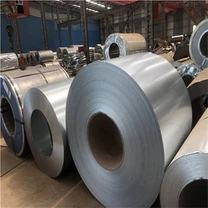
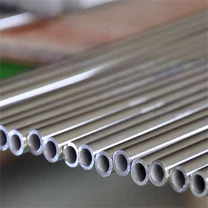
1. Friction and lubrication of steel plates during cold rolling
In the production process of cold-rolled steel plates, the work rolls with greater hardness roll the steel plates, causing them to plastically deform, which creates a lot of friction between the work rolls and the back-up rolls. There are two types of friction:
(1) The steel strip is deformed and the steel points are internally rubbed, resulting in deformation resistance;
(2) External friction occurs between the strip steel and the roll surface, the work roll and the backup roll.
Research has found that when cold rolling thin steel plates, the friction coefficient between the roll and the rolled material is bounded between the friction coefficient when boundary friction occurs and the fluid lubrication friction coefficient when there is a fluid lubricating film. Therefore, it is generally believed that during the steel plate rolling process, fluid lubrication and boundary lubrication coexist, which is a mixed friction state, and there is also local dry friction.
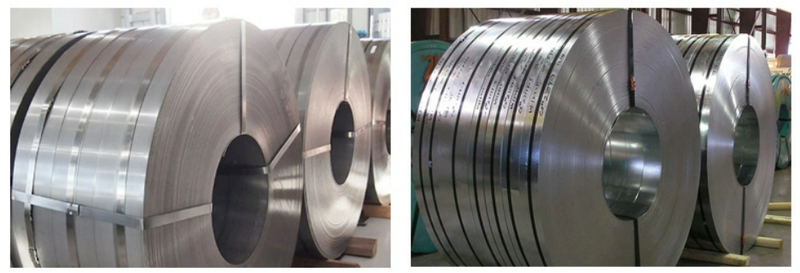
2. The role and performance requirements of cold rolling oil
Cold rolling oil plays an important role in the cold rolling process, specifically as lubrication and cooling. During the rolling process, due to the effect of pressure, the rolling will produce elastic deformation in the deformation zone, while the strip will produce plastic deformation. The emulsion prepared by cold rolling oil enters the deformation zone through the wedge action of the strip. In the deformation zone, it is subjected to pressures up to 1000MPa and high temperatures of 200°C, as well as mechanical damage to the strip and rolls, etc., causing the emulsion to occur. The phase change causes the separation of oil and water. The oil core is exposed and adheres to the steel plate and roller, which acts as a lubrication. The water and steam take away the heat and act as a cooling agent. This change in the emulsion is related to the water-dispersing properties of the cold rolling oil.
The water-free spreading performance of cold rolling oil refers to the ability to free oil from the emulsion, so that the oil can be evenly distributed on the surface of the roll and strip and form an oil film. Since the oil film can act as an insulator by reducing the surface heat transfer coefficient, from a cold rolling perspective, it is expected that this effect should be minimized as much as possible to ensure effective cooling of the rolls and strip. However, from a lubrication perspective, it is hoped that free oil will be used to form a continuous oil film to meet lubricity requirements. In order to take into account both lubrication and cooling performance, the cold rolling oil must be controlled to have moderate water-leaving properties.

The performance of cold rolling oil directly affects the stability of the rolling process and the quality of the plate surface. In order to ensure that cold rolling oil can perform its normal functions, it should have the following properties:
◆Good lubrication performance;
◆Good cooling performance;
◆Good anti-rust performance;
◆Appropriate emulsion stability;
◆Good cleanliness after rolling and annealing;
◆The emulsion is easy to maintain and has stable working performance;
◆Healthy and environmentally friendly.