Zinc-Aluminum-Magnesium (ZAM) steel
Zinc-Aluminum-Magnesium (ZAM) steel offers up to 20 times the corrosion resistance of traditional galvanized steel in coastal environments due to its unique "self-healing" protective film. While standard Zinc coatings (GI) fail rapidly when exposed to high chloride concentrations (salt spray), ZAM's ternary alloy structure creates an impenetrable barrier that thrives in the harsh, humid, and saline conditions typical of shorelines. At GNEE STEEL, we engineered our ZAM solutions to meet the 25-to-30-year design life required for modern coastal infrastructure and solar PV mounting systems.
1. The Chemistry of Coastal Corrosion: Why Salt Destroys Standard Steel
Chloride ions present in coastal air act as aggressive catalysts that accelerate the oxidation of iron, leading to premature structural failure in conventional materials. In standard Hot-Dip Galvanized (GI) steel, the zinc layer reacts with chlorides to form soluble zinc chloride, which easily washes away, leaving the steel substrate vulnerable.
In contrast, ZAM steel-typically composed of Zinc plus 1.5%–11% Aluminum and 1.5%–3% Magnesium-undergoes a complex chemical transformation.
2. Revolutionary Self-Healing: Protecting the Vulnerable "Cut Edge"
The most critical advantage of ZAM steel in coastal areas is its ability to automatically repair exposed steel at cut edges, drill holes, and scratches through chemical migration. In traditional coastal construction, the sheared edges of steel beams are the first points of failure, often showing "red rust" within weeks of installation.
With ZAM steel, a magnesium-rich aqueous film flows over the exposed cross-section. Research indicates that this "self-healing" layer covers the bare steel within a short period, providing:
No Need for Post-Treatment: Eliminates the cost of cold-galvanizing sprays or anti-rust paints at the job site.
Structural Integrity: Prevents the internal "delamination" of the coating that usually starts at the edges.
Edge Protection Data: Accelerated Salt Spray Tests (SST) show ZAM edges remaining rust-free for over 3,000 hours, whereas standard GI edges fail before the 500-hour mark.
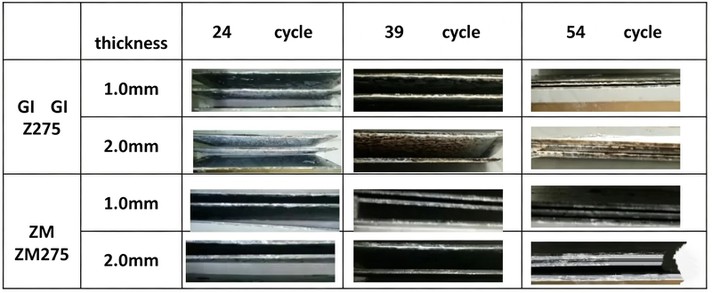
Testing of Zinc-Aluminum-Magnesium Steel
3. Alkaline and Ammonia Resistance: Beyond Just Salt
ZAM steel is the only coated steel product that maintains its integrity in environments characterized by high alkalinity and high salt, such as coastal agriculture or chemical piers. While Galvalume (55% Al-Zn) is excellent for heat reflectivity, it fails rapidly in alkaline environments (pH > 9).
ZAM's specific metallurgical structure provides a balanced pH resistance. This makes it the preferred material for:
Coastal Solar Farms: Where salt mist and high humidity are constant.
Seaside Livestock Facilities: Where animal waste (ammonia) creates a highly corrosive alkaline atmosphere.
Port Infrastructure: Where the material must withstand both chemical runoff and saline air.
4. Hardness and Abrasion Resistance: Withstanding Coastal Winds
The alloy coating of ZAM is significantly harder than pure zinc, making it resistant to the abrasive force of wind-blown sand common in coastal zones. On the Vickers hardness scale, ZAM coatings typically measure between 100–160 HV, while traditional galvanized coatings hover around 60–80 HV.
Coastal winds often carry sand and debris that "sandblast" structural components. A softer coating (GI) will thin out over time due to this physical wear, shortening its lifespan. The high hardness of ZAM ensures that the thickness of the protective layer remains constant even after years of exposure to abrasive coastal storms.
5. Economic Impact: Lowering the Total Cost of Ownership (TCO)
Switching to ZAM steel can reduce the total lifecycle cost of a coastal project by up to 30% by eliminating maintenance cycles and allowing for thinner, high-strength coatings. At GNEE STEEL, we help clients transition from heavy HDG coatings (e.g., Z600) to more efficient ZAM coatings (e.g., ZM120).
Weight Reduction: Because ZAM is more effective, you can use less coating weight to achieve the same or better protection, reducing the dead load of the structure.
Maintenance-Free: With a service life exceeding 30 years in C4 and C5 (highly corrosive) environments, the need for inspection and repainting is virtually eliminated.
ZAM steel is not just an alternative; it is the definitive technical upgrade for any project within 10 kilometers of the coastline. Its combination of Simonkolleite barrier formation, self-healing edges, and high physical hardness makes it the most resilient material in the global steel market today.
As a leading provider, GNEE STEEL maintains a comprehensive inventory of Zinc-Aluminum-Magnesium coils and profiles, ensuring your coastal infrastructure is built to last for generations.
Frequently Asked Questions (FAQ)
1. How close to the ocean can I use ZAM steel?
ZAM steel is specifically designed for "heavy marine" environments. It can be used as close as 100 meters from the shoreline, where salt spray is most intense, a zone where standard galvanized steel would typically fail within 5 years.
2. Does ZAM steel require special welding techniques?
No, ZAM steel can be welded using standard MIG, TIG, or spot welding. However, due to the magnesium and aluminum content, it is recommended to adjust the voltage and wire speed slightly. GNEE STEEL provides full technical parameters for welding our ZAM products.
3. Why is ZAM better than Galvalume (55% Al-Zn) for coastal areas?
While Galvalume is good, it lacks the self-healing properties of ZAM at cut edges. Furthermore, Galvalume is susceptible to "edge creep" and cannot handle the alkaline conditions often found in coastal industrial zones, whereas ZAM excels in both.
4. What are the common industry standards for ZAM steel?
ZAM steel is typically produced under international standards such as ASTM A1046/A1046M (Standard Specification for Steel Sheet, Terne [Zinc-Aluminum-Magnesium Alloy-Coated]) and EN 10346.
5. Will the "self-healing" layer look different from the rest of the steel?
Initially, the healing area may appear as a dark gray or dull finish compared to the rest of the sheet. This is the formation of the protective Simonkolleite layer and is a sign that the chemical protection is working.
6. Is ZAM steel environmentally friendly?
Yes. Because ZAM significantly extends the lifespan of steel products and reduces the need for toxic anti-corrosion paints and frequent replacements, it has a much lower carbon footprint over its total lifecycle.
7. Can ZAM steel be powder coated or painted?
Absolutely. ZAM provides an excellent substrate for powder coating. Its dense surface structure ensures superior paint adhesion, which is often used in high-end coastal architecture for both aesthetic and additional protective purposes.
8. How does GNEE STEEL ensure the quality of ZAM products?
All GNEE STEEL ZAM products undergo rigorous testing, including coating mass verification, T-bend tests, and accelerated salt spray testing, according to ISO 9227 to ensure they meet the demands of C5-level corrosive environments.