


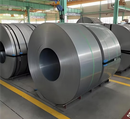
Hot Rolled Process for Steel Coil
Hot rolling uses slabs (mainly continuous slabs) as raw materials, and after heating, strips are made from rough rolling mills and finishing mills. The hot strip from the last rolling stand of the finish rolling is cooled by laminar flow to the set temperature. It is coiled by a coiler into a steel coil and the coiled steel is subjected to different finishing operations according to the user's different requirements. Lines (leveling, straightening, crosscutting or slitting, inspection, weighing, packaging, marking, etc.) are processed into steel plates, flat rolled and slit strips. To put it simply, a piece of slab is heated after it has been heated (that is, the hot, red hot steel piece on TV), rolled, and trimmed to form a steel plate.
Common Hot Rolled Steel Coil Grades
Q235;
Q345;
SS400;
SPCC;
SPCE;
SPCH
Cold Rolled Process for Steel Coil
Cold rolling: Using hot-rolled steel coils as raw materials, oxidizing the hides and removing the scales and then performing tandem cold rolling. The finished products are rolled hard rolls. The cold work hardening due to continuous cold deformation makes the strength, hardness, and toughness of the rolled hard rolls rise. The plastic index drops, so the stamping performance will deteriorate, and it can only be used for simple deformed parts. Rolled hard coils can be used as raw materials for hot dip galvanizing plants because hot dip galvanizing units are all provided with annealing lines. The weight of the rolled hard coil is generally 6~13.5 tons. The coil is continuously rolled at room temperature under the normal temperature. The inner diameter is 610mm.
Commen Cold Rolled Coil Grades:
JIS G3141-SPCC-SD, SPCC-SB, SPCD-SD, SPEC-SD;
JIS G3135-SPFC 340/390/440;
EN10130-DC01, DC03, DC04;
SAE1006, SAE1008;
ASTM A424-TypeⅡ


