
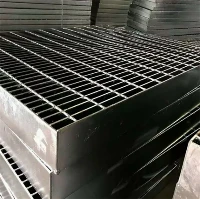
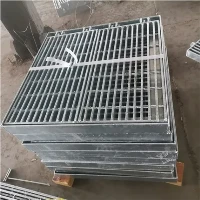


1. Hot-dip galvanized steel plate
Taking into account factors such as the production process of hot-dip galvanized steel sheets and finished product packaging, hot-dip galvanized steel sheets may have the following surface appearance defects:

(1) Disadvantages of the whole board
Surface defects of Hot Deep Galvanizing panels, such as wrinkles, dents, wavy edges, etc., will continue to affect the galvanized panels and cause surface defects. Therefore, operators must test the entire board before production.

(2) Black spots
a. The purity of the Hot Deep Galvanizing layer is insufficient, and metal residues form galvanic reactions on the surface of the zinc. When it is beneficial to hydrogen evolution, it is easy to cause black spots on the surface of the zinc layer.

b. When the copper, iron, arsenic and other residues in the hot-dip galvanizing layer are high in content, these residues will appear black after passivation.
c. The corrosion on the surface of the entire plate is not sufficiently resolved, resulting in sediment, which makes some areas unable to be galvanized, causing problems with the hot-dip galvanized layer and easily falling off, resulting in black spots.
d. Missing plating occurs during hot-dip galvanizing, and it is very easy to produce black spots during the post-processing process.
e. The hot-dip galvanizing solution is mixed with sediment or small ash (carbon or carbon substances), which adheres to the surface of the zinc layer or is in the zinc layer, and is strongly integrated with the zinc layer. Black spots can be seen on the finished galvanized sheet.
f. Erosion black spots. Caused by rough work during transportation and accumulation.
(3) White rust
When moisture returns to the surface of the galvanized sheet or precipitation penetrates into it, at a certain temperature, the zinc is oxidized and turns into white powder. The anti-corrosion ability of the surface layer caused by white rust is greatly reduced, affecting its use.
(4) The hot-dip galvanized layer is uneven
The zinc layer on the surface of the galvanized sheet is uneven, uneven in thickness, and even small particles on the surface appear. There is unnecessary zinc liquid on the surface of the hot-rolled strip steel coming out of the galvanizing pot. This unnecessary zinc liquid is scraped away with a demister (high-pressure gas injection) to control the thickness of the zinc layer. The air pressure of the demister, the distance between the demister and the hot-rolled strip, the speed of the hot-rolled strip, etc. will directly affect the thickness of the zinc layer. If the air path of the demister is unstable or the working pressure of the demister is insufficient, it will cause the deposition of hot-dip galvanized layer, that is, zinc scar.
(5) Welding flash
There is sediment or sludge (metallic or non-metallic impurities) in the hot-dip galvanizing solution. Sometimes this welding nodule is mixed in the hot-dip galvanizing layer. Shanghai model ship model industrial model industrial model uses Circular black spots appear on the surface, and even the entire plate cannot be stained with zinc, which can easily lead to iron spots.
(6) Scratches and abrasions, etc.
When the galvanized sheet coils pass through the support straightening machine, dirt on the straightening machine causes scratches and abrasions on the surface.
(7) Chromic acid stains
In order to improve the corrosion resistance of galvanized steel sheets, a very thin passivation layer is formed on the surface of hot-rolled steel sheets, which can be completed by chromic acid treatment, that is, chromation treatment. However, if the chromic acid is not treated well and there is residual liquid, light yellow bands or stains, or even black spots, will appear on the surface of the galvanized sheet.


