Definition of galvalume products: hot-dip galvalume steel sheets are coated steel sheets that use cold-rolled steel sheets as the base material and are hot-dip galvanized on both sides with aluminum-zinc alloy coating. The mass percentage of the coating alloy composition is 55% Al and 45% Zn. and 5%Si. Excellent corrosion resistance galvanized zinc layer physical isolation, electrochemical protection and trivalent aluminum

What are the advantages and disadvantages of galvalume steel sheets? Today we will answer them one by one for you. What are the characteristics of galvanized steel sheets? The reliability of galvanized steel sheets is good. The galvanized layer and the steel are metallurgically bonded and become part of the rigid surface, so the durability of the coating is relatively reliable. Galvalume steel is corrosion resistant.
Galvanizing process, advantages and disadvantages: The solvent on the surface of the wet hot-dip galvalume steel sheet enters the zinc liquid covered with molten solvent on the surface without drying (that is, the surface is still wet) for hot-dip galvanizing. The disadvantages of this method are: a. It can only be galvanized in a lead-free state, and the alloy layer of the coating is very thick and has poor adhesion.

During the production and processing process, the performance of galvalume steel sheet is better than that of hot-dip galvanizing, which is mainly reflected in the following aspects: processing performance of galvanized steel sheet is similar to that of hot-dip galvanizing, and can fully meet the needs of rolling, stamping, forming, and bending. and other forms of processing requirements. The corrosion resistance test is based on the premise of hot-dip galvanized steel sheets and galvanized steel sheets of the same thickness, coating, and surface treatment. Galvalume has excellent corrosion resistance than hot-dip galvanization, and its service life is 26 times that of ordinary galvanized steel sheets. Light reflection performance: The ability of galvanized zinc to reflect heat and light is twice that of galvanized steel. The reflectivity is greater than 0.70, which is better than the 0.65 specified by EPA Energy Star (U.S. Environmental Protection Agency Energy Star). Heat resistance: Ordinary hot-dip galvalume products are usually used at a temperature not exceeding 230 degrees. They will change color at 250 degrees, while galvanized sheets can be used in an environment of 315 degrees without discoloration for a long time. After being exposed to 300 degrees for 120 hours, the color change of Baosteel's heat-resistant passivation-treated galvalume-zinc steel plates was much lower than that of aluminum plates and aluminized plates.
This hybrid structure of hot-dip aluminum zinc silicon coating has its own unique advantages in corrosion resistance. When galvalumesheets are used, the zinc-aluminum eutectic in the aluminum-rich phase framework is corroded first. It has a good protective effect on the cut like pure zinc. The corroded product is not as easy to fall off as galvanized sheets. , but it is stored in the skeleton gap of the aluminum-rich phase, which can prevent further corrosion of the coating to a certain extent.
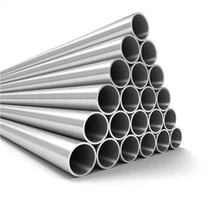
Galvalume has the advantages of uniform coating, strong adhesion and long service life. A complex physical and chemical reaction occurs between the galvanized steel pipe matrix and the molten plating bath to form a corrosion-resistant zinc-iron alloy layer with a tight structure. The alloy layer is integrated with the pure zinc layer and the steel pipe matrix. Therefore, it has strong corrosion resistance.
Molten zinc penetrates into the base iron - iron and zinc react to form an iron-zinc alloy - a pure zinc layer is formed on the iron-zinc alloy layer. The basic principle of the formation of the galvanized layer is mainly a high-temperature metallurgical reaction. When hot-dip galvanizing hardware and fasteners, the flux method (also known as the solvent method) is usually used. The process of hot plating using the flux method is mainly divided into two types: wet method and dry method.
The main reason for the "color difference" is that the silicon element in the steel accelerates the reaction of the iron-zinc alloy layer. Due to the innovation of steel-making technology, silicon-containing steel has become the mainstream of steel. Materials with high silicon content will not react when the zinc liquid temperature exceeds 450 or If it stays in the air for a long time, the bright silver pure zinc layer on the surface of the workpiece will be consumed and appear dark or light gray.