Best Coating for Solar Mounting C Channel: GI, GL or ZAM?
Zinc-Aluminum-Magnesium (ZAM) is the superior coating for solar mounting C Channels, outperforming Galvanized (GI) and Galvalume (GL) by providing up to 10 times the corrosion resistance and unique self-healing edge protection. While traditional coatings have served the industry for decades, the 25-to-30-year lifespan required for modern utility-scale PV projects demands a more resilient metallurgical solution. At GNEE STEEL, we specialize in high-performance C Channel steel, and our data confirms that switching to ZAM is the most effective way to eliminate structural maintenance and maximize project ROI in corrosive environments.
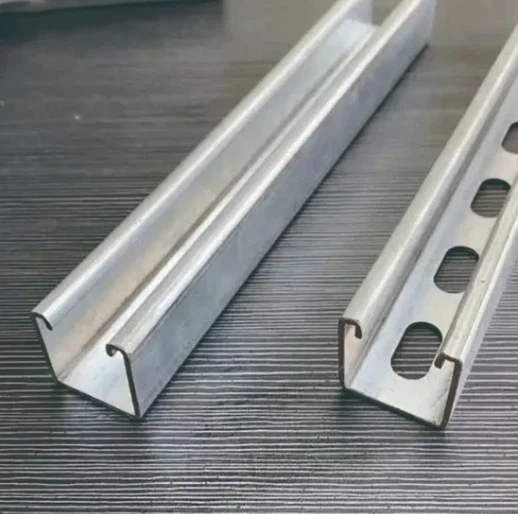
C Channel
1. Hot-Dip Galvanized (GI): The Traditional Foundation
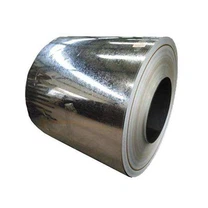
Hot-Dip Galvanized steel provides reliable sacrificial protection through a pure zinc coating, making it a cost-effective choice for inland solar projects with low-to-moderate corrosivity. Consisting of a coating that is typically 99% Zinc, GI is governed by international standards such as ASTM A123 or EN ISO 1461.
How it Works: The zinc layer acts as a physical barrier and a sacrificial anode, corroding before the interior steel is affected.
Best Use Case: Ideal for C Channels in dry, inland regions (C1–C2 categories) where salt spray and high humidity are not present.
The Limitation: GI lacks the hardness to resist significant mechanical abrasion and, most importantly, it does not offer active "self-healing" for the sheared edges or bolt holes of the C Channel, which can lead to localized "red rust" over time.
2. Galvalume (GL): The Heat-Reflective Hybrid
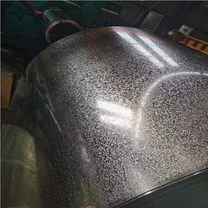
Galvalume steel, a 55% Aluminum-Zinc alloy, offers excellent uniform surface corrosion resistance and heat reflectivity but is prone to edge failure in solar applications. This coating was designed to combine the barrier protection of aluminum with the sacrificial properties of zinc.
The Strength: GL is exceptionally resistant to high temperatures and general atmospheric oxidation, often outlasting GI in standard roofing tests.
The Critical Weakness: In solar mounting, C Channels are heavily processed with holes and cuts. Galvalume is notoriously weak at protecting these "bare" edges (known as edge creep). Furthermore, GL performs poorly in alkaline environments-such as coastal salt mists or agricultural zones-where the aluminum barrier can be destabilized, leading to rapid degradation of the C Channel's structural integrity.
3. ZAM (Zinc-Aluminum-Magnesium): The High-Performance Evolution
Zinc-Aluminum-Magnesium (ZAM) is the only coating technology that provides a "self-healing" crystalline layer, making it the ideal choice for C Channels in coastal, industrial, and agricultural solar farms. Typically composed of Zinc with 1.5%–11% Aluminum and 1.5%–3% Magnesium, ZAM represents the pinnacle of anti-corrosion engineering in 2026.
The "Self-Healing" Advantage
When a ZAM-coated C Channel is cut or drilled, the Magnesium-rich ions in the coating react with moisture to form a dense, stable alkaline protective film (Simonkolleite). This film migrates to cover the exposed steel at the cut edge or bolt hole.
Technical Data: Salt spray tests (SST) per ISO 9227 show ZAM reaching 3,000+ hours without red rust, compared to just 500 hours for standard GI.
Installation Efficiency: Because it heals its own edges, ZAM eliminates the need for labor-intensive post-installation touch-up painting at the job site.

4. Hardness and Abrasion: Surviving the Field
The alloy layer of ZAM-coated C Channels is twice as hard as pure zinc, providing the mechanical durability needed to resist scratches during transportation and sand-abrasion in desert environments. On the Vickers scale, ZAM coatings measure between 120–160 HV, whereas standard GI coatings hover around 60–80 HV.
For solar mounting systems, this hardness is vital. C Channels are often subjected to:
Mechanical Friction: During the assembly of clamps and modules.
Wind-Borne Sand: In desert solar arrays, where soft GI coatings can be "sandblasted" away over time.
Vibration: Constant micro-movements caused by wind loads. The superior hardness of ZAM ensures the designated coating thickness remains intact for the entire 30-year design life.
5. Economic Analysis: Is ZAM More Cost-Effective?
While ZAM has a higher initial per-ton price than GI, its ability to provide equivalent protection with a thinner coating significantly reduces the Total Cost of Ownership (TCO). In the competitive 2026 solar market, material efficiency is the key to a lower Levelized Cost of Energy (LCOE).
Material Efficiency: A ZM120 coating (120g/m²) can often replace a much heavier Z600 (600g/m²) GI coating. This reduces the total weight of the C Channels, lowering shipping costs and facilitating faster installation.
Maintenance Savings: By eliminating the risk of edge rust and the need for repainting, ZAM-coated structures are virtually maintenance-free for 25+ years.
Procurement Strategy: At GNEE STEEL, we offer market-linked pricing that allows developers to lock in the long-term value of ZAM, ensuring the structural longevity of the solar array is guaranteed.
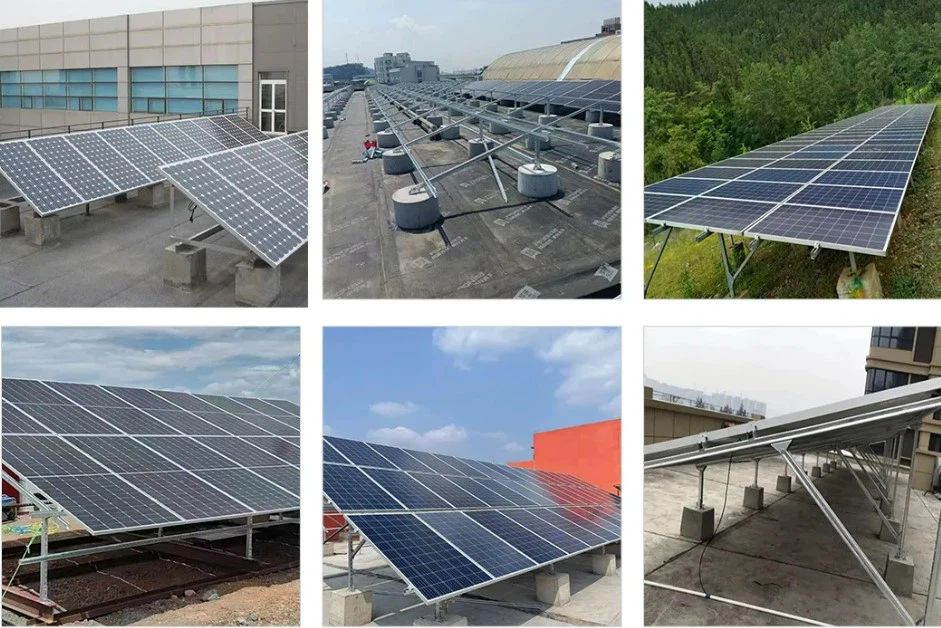
Application Scenarios for C-Channel Steel
Selecting ZAM for your solar mounting C Channels is an investment in 30 years of structural security. It is the only coating that addresses the specific vulnerabilities of processed steel-cuts, holes, and abrasions-while thriving in the world's most corrosive zones.
GNEE STEEL is a leading global supplier of Zinc-Aluminum-Magnesium and Galvanized C Channels. Whether you are building a coastal tracker or a desert fixed-tilt system, our technical team will provide the precision-engineered profiles your project requires.
Contact GNEE STEEL today for a technical consultation and a personalized quote.
Frequently Asked Questions (FAQ)
1. Why is ZAM better than GI for coastal solar farms?
Coastal areas contain high concentrations of chloride ions. ZAM creates a dense mineral layer (Simonkolleite) that is significantly less soluble than pure zinc oxide, preventing salt mist from reaching the steel substrate and extending the life of the C Channel by decades.
2. Does ZAM steel require special welding?
ZAM can be welded using standard MIG/TIG or spot-welding methods. It generally produces less "zinc smoke" than traditional GI, though we recommend adjusting welding parameters slightly to account for the aluminum and magnesium content.
3. Is ZAM more expensive than Galvalume (GL)?
Initially, ZAM may carry a small premium over GL, but GL is not recommended for solar mounting C Channels due to its poor edge protection and lack of alkaline resistance. ZAM provides far better value by ensuring the structure does not fail at the bolt holes.
4. Can I use thinner C Channels if I choose ZAM?
ZAM allows for a thinner coating, but the thickness of the steel (the gauge) depends on your structural wind and snow load requirements. However, because ZAM stays rust-free longer, you don't need to add "corrosion allowance" to the steel thickness, which can save material.
5. How do I get a live quote for ZAM-coated C Channels?
Because steel and alloy prices fluctuate with the global market, we provide tailored quotes based on your specific dimensions, ZM coating weight, and volume. Simply contact the GNEE STEEL sales team with your project specs for a live market-linked estimate.