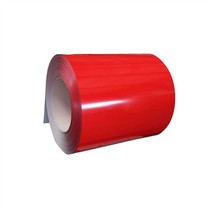
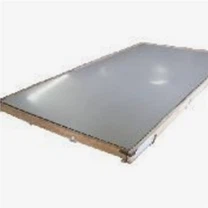
DC01 Steel: Definition, Characteristics, Applications, Equivalent Grades
DC01 steel is a cold-rolled, low-carbon steel defined according to European standard EN 10130. It belongs to the DC (cold-drawn) steel family, where "DC" denotes suitability for cold forming, and "01" designates the basic quality grade. DC01 is an unalloyed steel whose clean surface and uniform microstructure make it particularly suitable for secondary processes such as coating, painting, electroplating, and welding. However, DC01 lacks inherent corrosion resistance.

-
What is DC01 Steel?
DC01 steel, or 1.0330, is a non-alloy quality steel with low carbon. Made as flat sheets by cold rolling, it has a smooth surface and good formability. Types include DC01-A, DC01-B, and electro-galvanized DC01+ZE (1.0330+ZE) under EN 10152. Related standards are EN 10130 and EN 10131. Variants DC03 to DC07 offer better formability. It is used for automotive parts, appliances, and metal products.
-
DC01 Steel Properties
DC01 steel offers a unique combination of strength, ductility, and surface quality. It also exhibits excellent cold formability and good weldability.
| Type | Cold-rolled, low-carbon non-alloy steel |
| Standard | EN 10130 (for cold-rolled flat products) |
| Surface Quality | Smooth and uniform, ideal for coatings |
| Strength | Moderate (yield strength typically 140–280 MPa) |
| Ductility | Excellent; suitable for deep drawing and bending |
| Weldability | Very good for spot and arc welding |
| Machinability | Moderate; can be improved with lubrication |
| Corrosion Resistance | Low (requires coating for protection) |
| Dimensional Accuracy | High; tight thickness and flatness control |
| Formability | Excellent for cold forming and stamping |
-
DC01 Steel Equivalent Grades
| Standard | Equivalent Grade |
| EN (EU) | DC01 (1.0330) |
| USA (SAE) | SAE1008, SAE1010 |
| Germany (DIN/WNr) | St12, FeP01 |
| Japan (JIS) | SPCC |
| France (AFNOR) | F12, FeP01 |
| England (BS) | CR4, FeP01 |
| Italy (UNI) | FeP01 |
| Spain (UNE) | AP00 |
| China (GB) | 08, 08F |
| Austria (ONORM) | St02Z |
| Russia (GOST) | 08kp, 08ps |
| ISO | CR1, CR22 |
-
DC01 Steel Chemical Composition
| Element | Content (%) |
| Carbon, C | ≤ 0.12 |
| Manganese, Mn | ≤ 0.60 |
| Phosphorus, P | ≤ 0.045 |
| Sulfur, S | ≤ 0.045 |
| Silicon, Si | ≤ 0.03 |
| Nitrogen, N | ≤ 0.008 |
| Aluminum, Al | ≤ 0.02 |
| Copper, Cu | ≤ 0.20 |
- How Does The Corrosion Resistance Of DC01 Compare To Other Low-Carbon Steels?
DC01 steel is a non-alloy, low-carbon cold-rolled steel. Because it does not contain high levels of corrosion-resistant elements such as chromium or nickel, its inherent resistance to rust is relatively weak. Without surface protection, DC01 steel is prone to oxidation and rusting when exposed to moisture or open environments. To extend its service life and enhance corrosion resistance, surface treatments are typically applied.
Common protection methods include:
Electro-galvanizing (EN 10152 DC01+ZE) – Forms a thin and uniform zinc layer on the steel surface, effectively blocking air and moisture and improving rust resistance.
Hot-dip galvanizing (EN 10346 DC01+Z) – Creates a much thicker zinc coating with stronger durability, making it suitable for outdoor structures, automotive parts, and other applications that require long-term corrosion protection.
Phosphating or painting – Enhances corrosion resistance while improving coating adhesion and overall appearance, making it ideal for products that require further paint finishing.

-
FAQ
What standard defines DC01 steel?
DC01 steel is defined under the EN 10130 standard, which specifies cold-rolled low-carbon steel sheets and strips for cold-forming applications.
What is DC01 steel used for?
DC01 steel is mainly used in automotive panels, appliance housings, furniture, electrical enclosures, and precision-formed components where smooth surface finish and dimensional accuracy are essential.
Is DC01 good for welding?
Yes. DC01 steel has excellent weldability due to its low carbon content, making it suitable for spot, seam, and arc welding without significant risk of cracking or distortion.
What is the difference between DC01 and DC03?
The main difference lies in formability; DC03 contains slightly lower carbon and higher elongation than DC01, allowing it to withstand deeper drawing and more complex forming operations.
Does DC01 need surface treatment?
Although DC01 can be used untreated, surface coatings such as galvanizing, phosphating, or painting are often applied to improve corrosion resistance and aesthetic finish.