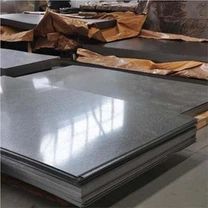
As the name suggests, galvanized steel plate is a material made of "steel plate" that is "galvanized". First, let's introduce the manufacturing method and basic knowledge.
Manufacturing method
Galvanized steel sheet is a material made by galvanizing SPCC (cold-rolled steel sheet). SPCC is a relatively inexpensive and easily available steel plate with excellent processability, so it is often used for forming processes such as bending and deep drawing. However, SPCC is extremely easy to rust, so surface treatment is basically required. The surface treatment of SPCC includes various methods such as painting and plating, among which galvanized steel sheets are galvanized.
Features
Plating is a surface treatment that forms a metal thin film on the surface of metal or resin. Among them, the one that forms a zinc film is called galvanizing. Zinc combines with oxygen in the air to form a passivating oxide film. It is therefore characterized by an extremely high anti-rust effect.

In addition, zinc has a higher ionization tendency than iron, so it also has the characteristic of oxidizing faster than iron. Therefore, if iron (steel) is galvanized, even if a small scratch is temporarily produced on the plating surface, the iron inside will be exposed and will preferentially corrode the surrounding zinc, thereby preventing iron corrosion. This phenomenon is called sacrificial embalming. Therefore, iron (steel) is mainly galvanized.
Type
Galvanizing is classified according to the plating method and metal.
There are two methods: hot-dip galvanizing and electro-galvanizing.
Hot-dip galvanizing is a method of immersing steel sheets and parts in heated and molten zinc. Think cheese fondue, chocolate fondue, etc. Also called hot dip plating and hot dip galvanizing. In addition to obtaining a thicker electroplating layer, an alloy layer of zinc and base metal can be obtained between the electroplating layer and the base metal layer, so it is very strong and can obtain long-term corrosion resistance. This is its characteristic. On the other hand, since products and parts are immersed in zinc that has been melted at high temperatures, deformation due to heat may occur.

Electro-zinc plating is a method in which zinc and the material to be plated are put into a solution and electrified so that the zinc dissolved in the solution is precipitated on the surface of the material to be plated. There are many methods of electroplating, such as zinc ammonium bath, zinc potassium chloride bath using acidic solution, and cyanide bath and zincate bath using alkaline solution. It is characterized by uniform thickness and excellent decorative properties. On the other hand, unlike hot-dip galvanizing, electro-galvanizing cannot be used directly. Chromate treatment is usually performed to improve corrosion resistance and prevent the production of white powder due to corrosion. Chromate treatment is a treatment that makes zinc plating more durable by using a solution similar in composition to that used in chrome plating. Chromate treatment can be used for decoration, for example to add a color close to yellow (gold), black or gloss.
In the past, chromate treatment using hexavalent chromium was the mainstream. However, hexavalent chromium is toxic, so now trivalent chromium is used. Although trivalent chromium is non-toxic, the use of nickel alloys and molybdenum for treatments without trivalent chromium is increasing due to the global chromium-free trend. In recent years, from the viewpoint of environmental issues, restrictions have sometimes been placed on metals used in the manufacturing stage, and plating methods and treatments may also change. Please be sure to check back frequently for the latest information.