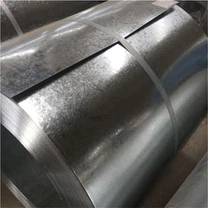
The process of galvanizing carbon steel produces various effects that help in the manufacture of various parts of industrial objects, and it comes in many forms. Galvanized steel is also used in the construction of house frames, truck and bus bodies, household appliances, electrical towers, metal barrels, and various other items that are integral to our daily lives.
Galvanized steel is an ideal material for industrial processes involving caustic soda and potassium hydroxide because galvanized steel has a zinc film that is resistant to weakly alkaline solutions; more so than aluminum. Aluminum and galvanized steel are both compatible with each other and are neighbors on the galvanic scale. Over the past half century there have been many aluminum substructures with galvanized steel facades.

Aluminum alloy can be produced by die-casting process, and casting production is more convenient than steel, but the hardness cannot be compared with galvanized steel at all. Galvanized steel has become one of the most used materials in the world due to its low price and reliable performance. It is an indispensable component in the construction industry, manufacturing industry and people's daily life.
Generally, aluminum alloys are divided into 1-7 series, a total of 7 series. The common names and hardness are briefly explained below (note: the state is mainly the normal state, the hardness of the special state will be different). 1 series of industrial pure aluminum represented by 1100 1050 1060, also called aluminum-zinc alloy, with a hardness between 25-32!
Aluminum alloy is the most abundant metal element in the earth's crust, with a content of 8.3%. Mainly found in aluminosilicate ores, as well as bauxite and cryolite. The content of aluminum in the earth's crust ranks third after oxygen and silicon. It is the most abundant metallic element in the earth's crust, and its reserves rank second among metals. Among metal types, it is the second largest category of metal after steel.