
When the transformer is used in an environment with an altitude above 1,000 meters, it is collectively called a high-altitude area. Due to its special geographical environment, high-altitude areas have much lower oxygen content per unit volume than low-altitude areas in the plains, with low temperatures, windy sand, thunderstorms, and high ultraviolet radiation intensity. The low air density at low air pressure affects the dielectric strength of the air, the air cooling effect and the reduction of the arc gap air dielectric strength. As a result, the air insulation voltage of electrical products and equipment is also reduced; because air-cooled electrical equipment is prone to increase temperature rise, and it is more difficult to extinguish arcs in the air. Large daily temperature changes may cause the transformer seal to be difficult to maintain and the mechanical structure to deform or crack.
The high intensity of solar radiation causes poor heat dissipation in outdoor transformers and other equipment and increases the temperature. In the presence of oxidation and water, it also accelerates the aging of organic insulating materials and coatings. Under these harsh conditions, it is easy to shorten the service life of transformers and other electrical equipment. .
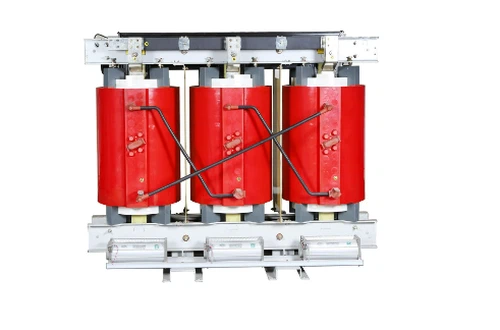
As the altitude increases, the pressure of the atmosphere decreases, and the air density and humidity decrease accordingly. The characteristics are: a. The air pressure or air density is lower; b. The air temperature is lower and the temperature changes are larger; c. The air is absolutely The humidity is low; d. The solar radiation is high; e. The precipitation is low; f. There are many windy days every year; g. The soil temperature is low and the freezing period is long. Therefore, in areas with higher altitudes, its impact on electrical characteristics is also great, among which the main ones are:
1 Impact on electrical clearance
Electrical clearance refers to the direct spatial distance between two conductive objects with a voltage difference. Mainly for breakdown. Atmospheric pressure, temperature, and humidity all affect air density, electron free path, impact ionization, and adsorption effects. Therefore, air density, humidity, and altitude should be calibrated. According to Bashen's law, when the altitude becomes higher, the air becomes thinner, the air pressure decreases, and the density decreases. It can be seen that the breakdown distance of the same voltage level decreases. Therefore, in order to meet the anti-breakthrough safety distance of the plateau, the withstand voltage level must be downgraded or the electrical clearance must be increased.
2 Impact on creepage distance
Creepage distance refers to the shortest distance along the insulation surface between two conductors with a voltage difference. This conduction occurs on the insulation surface. It is related to the pressure difference, the degree of environmental pollution and the leakage resistance index of the insulation material. The creepage distance cannot be less than the electrical clearance. Under conditions of high ambient humidity, interphase conduction along the insulating surface may occur.
3 Impact on temperature rise
Devices that use ordinary air convection heat dissipation are affected by changes in air characteristics when altitude increases. In high-altitude areas, the air pressure and air density decrease, the heat dissipation capacity weakens, and the temperature rise of the equipment under the same load increases, so the equipment must be derated.
4 Requirements for dielectric properties
Affected by the thin air that occurs at high altitudes, the device's power frequency voltage withstand capability and impulse withstand voltage capability are weakened, similar to the impact on electrical clearances. Therefore, the same calculation process should be done for the dielectric properties.


