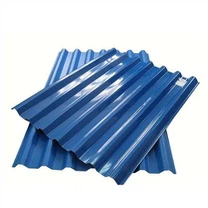
Zinc Aluminum-magnesium Coated Steel

Zinc aluminum-magnesium coated steel (ZAM Steel) has become ideal for extreme environments such as offshore engineering and chemical plants due to its self-repairing ability, ultra-high corrosion resistance, and environmental protection.GNEE STEEL offers customized ZAM steel coil and sheet solutions and further processing services for architectural and industrial applications.
What is Zinc aluminum-magnesium Coated Steel?
Zinc-Aluminum-Magnesium coated steel, also known as ZAM-coated steel, is an innovative steel finish with superior corrosion resistance. Initially, pure zinc alloys were primarily used to enhance the corrosion resistance of metal surfaces. With continuous innovation in steel manufacturing technology, corrosion-resistant coated steels like zinc-aluminum alloys and ZAM alloys continue to emerge in the market, significantly improving the corrosion resistance of steel surfaces.
Composition of the substrate
| Element | Content (%) | Function |
|---|---|---|
| C | ≤ 0.12 | Ensures ductility and weldability |
| Mn | 0.20-0.60 | Improves strength and hardenability |
| Si | ≤ 0.05 | Deoxidizes, reduces inclusions |
| P/S | ≤ 0.025 | Controls contaminants, prevents brittleness |
Mechanical properties of the substrate
| Tensile Strength | Yield Strength | Elongation | Hardness |
|---|---|---|---|
| 270~550 MPa | 140~350 MPa | 20%~40% | 60~120 HV |
Composition of coatings
| Elemental | content (%) | Function |
|---|---|---|
| Zn | 90-94 | Sacrificial anodic protection, dominant corrosion reaction |
| Al | 4-11 | Formation of oxide film, high-temperature resistance, and barrier protection |
| Mg | 0.2-3 | Promote self-healing, generate an Alkaline protective film |
| Si | 0.1-0.5 | Inhibits the overgrowth of Fe-Al alloy layer |
Why Choose Zinc aluminum-magnesium Coated Steel?
Zinc aluminum-magnesium coated steel combines the characteristics of steel, zinc, aluminum, and magnesium with excellent corrosion resistance, oxidation resistance, machinability, and abrasion resistance. It can be used as an alternative to stainless steel, prepainted steel, galvanized steel, and zinc-aluminum-plated steel in many applications.
Excellent corrosion resistance: The combination of zinc, aluminum, and magnesium provides a strong protective barrier against salt spray for 1500-3000 hours.
Self-healing ability: The addition of magnesium enhances the coating's ability to self-heal in the event of scratches or damage, and in the event of scratches, magnesium promotes the creation of an alkaline protective film that slows the expansion of red rust.
Acid and alkali resistance: Stable in pH 4-11 range, adaptable to industrial pollution environment.
High Temperature Resistance: Aluminum and magnesium components increase the resistance of steel to high temperatures, chemicals and other factors.
Reflectivity: Zinc-aluminum-magnesium coated steel reflects heat and reduces energy consumption when used in construction materials.
Wear resistance: Aluminum and magnesium increase the resistance of the steel to wear.
What are the application scenarios for zinc-aluminum-magnesium steel?
ZAM coil and sheet Widely used in building roofs, walls, window frames, metal façades, car bodies, chassis, motor housings, brackets, agricultural storage facilities, solar racks, parapet façades, cable bridges, noise barriers, and other applications, with a corrosion resistance of more than 25 years,
Construction Industry: Coastal building roofs/walls, steel bridges.
Automotive: Chassis guards, inner door panels.
Appliances & Energy: Solar racks, air conditioning units.
Agriculture and Transportation: Greenhouse skeleton, highway soundproof screen.


How to Make Zinc aluminum-magnesium ZAM-coated Steel?
Zinc-aluminum-magnesium steel is a multistep process of coating a steel substrate with zinc, aluminum, and magnesium alloys, starting with the preparation of the steel sheet/coil, followed by hot-dip galvanizing of the aluminum-magnesium coated steel, and then cutting and shaping of the coated steel to finish the quality control.
Substrate pre-treatment: degreasing → pickling → auxiliary plating agent (zinc ammonium chloride) → drying.
Hot-dip plating: immersed in 430-450°C ZAM alloy bath (Zn-Al-Mg-Si).
Air Knife Control: Precise regulation of plating thickness (60-200g/m² on both sides).
Cooling and post-treatment: water cooling → chrome-free passivation → oiling or laminating.
Which is Better ZAM, GI, GL?
| Indicators | GI (Galvanized) | GL (Aluminum-Zinc Plated) | ZAM (Zinc-Aluminum-Magnesium) |
|---|---|---|---|
| Salt Spray Resistance (hrs) | 200-400 (Z120) | 600-1500 (AZ150) | 1500-3000 (ZM150) |
| Cutting Corrosion Resistance | Poor (susceptible to red rust) | Medium (Aluminum Retarded Corrosion) | Superior (Self-healing) |
| Process Hardness (HV) | 70-150 | 200-300 | 250-400 |
| Cost | Low | Medium | High |
FAQ
1.What is Galvalume steel?
A steel sheet coated with aluminum-zinc-magnesium alloy for corrosion resistance.
2.What is the difference between Galvanized and Galvalume steel?
Galvalume has aluminum and magnesium in the coating, offering better corrosion resistance than pure galvanized steel.
3.What is the typical coating composition of Al-Zn-Mg steel?
Approximately 55% aluminum, 43.4% zinc, and 1.6% magnesium.
4.Can Galvalume steel be used in coastal areas?
Yes, it is ideal for coastal environments due to excellent corrosion resistance.
5.What thicknesses are available for Al-Zn-Mg steel coils?
Commonly 0.2mm to 2.0mm, depending on application.