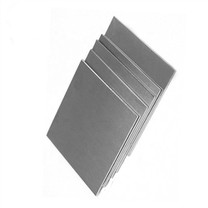
Cold Rolled Steel
What Is Cold Rolled Steel?
DC01 steel (1.0330 material) is a European standard cold-rolled quality low-carbon steel flat product for cold forming. In BS and DIN EN 10130 standard, it contains 5 other steel grades: DC03 (1.0347), DC04 (1.0338), DC05 (1.0312), DC06 ( 1.0873) and DC07 (1.0898), the surface quality is divided into 2 types: DC01-A and DC01-B. In addition, this steel is also used under electrogalvanizing conditions. The designation of the steel is DC01+ZE (or 1.0330+ZE), and the standard is EN 10152.
What does DC stand for in the context of cold-rolled steel?
DC steel plates have high tensile strength and elongation, giving them good processing properties during the manufacturing process and is easy to bend, stamp, form and weld. This makes DC steel plates widely used in the manufacturing of automotive parts, home appliances, construction and other parts that require high strength and precision. DC steel plates' s low carbon content gives them excellent weldability and machinability. They can be processed through various welding and cutting processes, such as arc welding, gas shielded welding, laser cutting, etc., to meet the needs of material processing performance in different fields. Lastly, the carbon emission is low and meets the requirements of environmental protection and sustainable development.
DC01 Meaning and Definition
D: (Drawing) flat products for cold forming
C: Cold rolled
DC01: Drawing quality
DC03: Deep drawing quality;
DC04, DC05: Special deepdrawing quality;
DC06: Extra deepdrawing quality;
DC07: Super deep drawing quality.
DC01 steel offers a unique combination of strength, ductility, and surface quality. It also exhibits excellent cold formability and good weldability.
Here is a brief overview of DC01's key characteristics:
| Type | Cold-rolled, low-carbon non-alloy steel |
| Standard | EN 10130 (for cold-rolled flat products) |
| Surface Quality | Smooth and uniform, ideal for coatings |
| Strength | Moderate (yield strength typically 140–280 MPa) |
| Ductility | Excellent; suitable for deep drawing and bending |
| Weldability | Very good for spot and arc welding |
| Machinability | Moderate; can be improved with lubrication |
| Corrosion Resistance | Low (requires coating for protection) |
| Dimensional Accuracy | High; tight thickness and flatness control |
| Formability | Excellent for cold forming and stamping |
According to the EN 10130 standard, DC01 steel is an unalloyed, low-carbon, cold-rolled steel whose carbon content is kept to an extremely low level to enhance ductility and reduce the risk of cracking during cold forming.
The following is a typical chemical composition range for DC01 steel:
| C (Carbon) | ≤ 0.12 | Controls hardness and strength; low carbon ensures high ductility |
| Mn (Manganese) | ≤ 0.60 | Enhances strength and hardenability; improves surface finish |
| P (Phosphorus) | ≤ 0.045 | Increases strength slightly but can reduce toughness |
| S (Sulfur) | ≤ 0.045 | Improves machinability but can decrease ductility |
| Al (Aluminum) | ≤ 0.07 | Used for deoxidation; improves grain refinement and surface quality |
| Fe (Iron) | Balance | Base element of the steel matrix |
FAQ:
1. Is cold rolled steel suitable for deep drawing?
Yes, certain grades such as DC03, DC04, DC05, and DC06 are specifically designed for deep drawing and extra-deep drawing applications.
2. What thickness range is available for cold rolled steel sheets?
Cold rolled steel sheets are commonly available in thicknesses ranging from 0.3 mm to 3.0 mm, depending on the grade and standard.
3. Does cold rolled steel rust easily?
Cold rolled steel itself does not have corrosion resistance. Without surface treatment, it can rust when exposed to moisture. Common protection methods include oiling, galvanizing, or painting.
5. Can cold rolled steel be galvanized?
Yes, cold rolled steel is often used as the base material for galvanized steel products, as its smooth surface ensures uniform zinc coating.