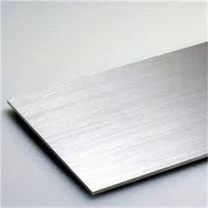
What Is Zinc Aluminum Magnesium Coated Steel?
Zinc-Aluminum-Magnesium (ZAM) coated steel is a high-performance alloy-coated material that offers up to 10 times the corrosion resistance of traditional galvanized steel. By integrating Magnesium and Aluminum into a Zinc-based bath, this material creates a chemically stable "self-healing" barrier that thrives in extreme environments where standard coatings fail. As a leading global supplier, GNEE STEEL provides ZAM solutions engineered to meet the 25-to-30-year service life requirements of the modern solar, automotive, and infrastructure industries.
What Is Zinc Aluminum Magnesium Coated Steel?
Zinc-Aluminum-Magnesium (ZAM) coated steel is a high-performance alloy-coated material that offers up to 10 times the corrosion resistance of traditional galvanized steel. By integrating Magnesium and Aluminum into a Zinc-based bath, this material creates a chemically stable "self-healing" barrier that thrives in extreme environments where standard coatings fail. As a leading global supplier, GNEE STEEL provides ZAM solutions engineered to meet the 25-to-30-year service life requirements of the modern solar, automotive, and infrastructure industries.
1. Composition and Structure: What Makes ZAM Unique?
ZAM steel is defined by its ternary alloy coating, typically consisting of Zinc combined with 1.5%–11% Aluminum and 1.5%–3% Magnesium. Unlike traditional Hot-Dip Galvanizing (GI), which relies on a nearly pure zinc layer, the addition of Magnesium (Mg) and Aluminum (Al) alters the metallurgical structure of the coating.
The presence of Magnesium acts as a catalyst during the oxidation process. When the material is exposed to the atmosphere, it promotes the formation of a very fine, dense, and adherent protective film known as Simonkolleite ($Zn_5(OH)_8Cl_2 \cdot H_2O$). This crystalline structure is significantly less soluble than the porous zinc oxides found on standard GI steel, effectively "locking" the surface against corrosive agents like oxygen and moisture.
2. How Does the "Self-Healing" Mechanism Work?
The "self-healing" property of ZAM steel is its most revolutionary feature, allowing the coating to migrate and cover exposed steel at cut edges, drill holes, and scratches. In conventional steel products, any break in the coating-such as a sheared edge during installation-becomes an immediate site for "red rust" to begin.
When ZAM steel is cut or scratched, the Magnesium-rich ions in the coating react with surface moisture to form a high-alkaline protective film. This film flows over the
exposed steel cross-section, creating a secondary barrier that prevents oxygen from reaching the iron.
Reliability: Accelerated Salt Spray Tests (SST) confirm that ZAM edges can remain rust-free for over 3,000 hours, whereas standard Galvanized (GI) and Galvalume (GL) often show significant corrosion before the 500-hour mark.
Maintenance: This eliminates the need for expensive post-treatment, such as cold galvanizing spray or manual painting of cut ends on-site.
3. Comparative Performance: ZAM vs. GI vs. GL
Zinc-Aluminum-Magnesium steel outperforms both Galvanized (GI) and Galvalume (GL) in harsh atmospheric and alkaline conditions. To understand its market position, it is essential to compare the three core technologies:
| Feature | Galvanized (GI) | Galvalume (GL) | ZAM Steel (ZM) |
| Coating Type | 99% Pure Zinc | 55% Al-Zn Alloy | Zn-Al-Mg Alloy |
| Edge Protection | Sacrificial (Weak) | Poor (Edge Creep) | Excellent (Self-Healing) |
| Alkaline Resistance | Average | Poor | Superior |
| Hardness (HV) | 60–80 HV | 80–100 HV | 120–160 HV |
| Corrosion Rate | High | Moderate | Ultra-Low |
While Galvalume is excellent for heat reflectivity in roofing, it fails in alkaline environments (like livestock farms or coastal zones). ZAM steel provides the "best of both worlds"-the barrier protection of Aluminum and the sacrificial protection of Zinc, enhanced by the stability of Magnesium.
4. Why Industry Leaders Are Switching to ZAM Steel
The shift toward ZAM steel is driven by the demand for "Weight Reduction and Longevity," allowing engineers to use thinner coatings without sacrificing durability. Because ZAM is 5 to 10 times more effective than standard galvanizing, a ZM120 coating (120g/m²) can often replace a much heavier and more expensive Z600 (600g/m²) hot-dip galvanized coating.
High-Performance Applications:
Solar Photovoltaic Systems: Solar farms are built for 25+ year lifespans. ZAM's resistance to salt spray and soil corrosion makes it the industry standard for ground-mount racking and tracking systems.
Infrastructure & Roadways: Sound barriers, highway guardrails, and bridge components benefit from the high abrasion resistance (hardness) of the ZAM alloy.
Automotive & HVAC: The high formability and scratch resistance of ZAM steel make it ideal for complex structural parts and outdoor air conditioning units.
5. Technical Specifications and Global Standards
GNEE STEEL produces Zinc-Aluminum-Magnesium products in strict accordance with international standards, including ASTM A1046 and EN 10346. These standards ensure that the mechanical properties-such as yield strength and elongation-remain consistent while providing the highest level of chemical protection.
Our ZAM steel is available in various grades:
Low Aluminum ZAM: Optimized for high-speed welding and general construction.
Medium/High Aluminum ZAM: Engineered for maximum corrosion resistance in coastal (C5-M) and heavy industrial (C5-I) environments.
Zinc-Aluminum-Magnesium coated steel represents the pinnacle of modern surface-protection technology, offering an unmatched balance of cost, durability, and ease of use. By choosing ZAM, you are investing in a material that repairs itself, lasts decades longer than traditional alternatives, and reduces the total carbon footprint of your project through decreased maintenance and material efficiency.

Packaging and Shipping
Frequently Asked Questions (FAQ)
1. Is ZAM steel the same as "Zinc-Alloy" steel?
While ZAM is a zinc-alloy steel, it is specifically a ternary alloy. Most "zinc-alloy" terms refer to binary alloys (like Zinc-Nickel or Zinc-Iron). ZAM is unique because the addition of Magnesium is what enables the "self-healing" mechanism and superior lifespan.
2. Can ZAM steel be used in coastal areas?
Yes. ZAM steel is the preferred material for coastal and offshore environments (within 10km of the shore). It resists chloride-induced corrosion significantly better than standard galvanized steel.
3. Does the self-healing feature work on large cut areas?
The self-healing migration is most effective on sheared edges, drill holes, and scratches (up to a few millimeters wide). For extremely large areas of exposed steel, standard engineering practices for protection are still recommended, though ZAM will still outperform other coatings at the periphery.
4. What is the typical lifespan of ZAM steel?
In moderate environments, ZAM steel can last over 50 years. In highly corrosive C5 environments (coastal/industrial), it is designed to exceed 25 to 30 years without significant structural maintenance.
5. Is ZAM steel difficult to weld?
ZAM can be welded using all standard techniques (MIG, TIG, Spot). Due to the Magnesium and Aluminum content, there is slightly less zinc fuming than with HDG, though proper ventilation and parameter adjustments (voltage/speed) are recommended.
6. Can I paint or powder coat ZAM steel?
Yes. The dense surface structure of ZAM provides an excellent base for powder coating and industrial paints. It often results in better paint adhesion than traditional galvanized surfaces.
7. Why is ZAM harder than regular galvanized steel?
The inclusion of Magnesium and Aluminum creates a more complex crystalline structure in the alloy layer. This results in a surface hardness of 120–160 HV, making it highly resistant to mechanical scratches during transportation and installation.
8. Is ZAM steel environmentally friendly?
Yes. Because it lasts significantly longer and requires no maintenance painting (which can release VOCs), it is considered a more sustainable choice for green building and renewable energy projects.