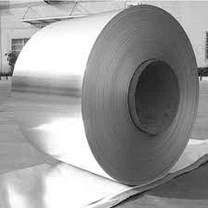
ZAM Steel Coil Applications in Solar Mounting Systems
Zinc-Aluminum-Magnesium (ZAM) steel coils are the most technically advanced material for solar mounting systems, offering a 30-year service life that exceeds the operational requirements of utility-scale PV projects. As the solar industry shifts toward harsher environments-including coastal salt mists and high-ammonia agricultural zones-traditional galvanized steel often fails to provide the necessary durability. GNEE STEEL specializes in high-grade ZAM steel coils that combine superior corrosion resistance with structural light-weighting, ensuring that your solar investment remains secure for decades.
1. Structural Superiority: Why Solar Racking Requires ZAM Coils?
The high strength-to-weight ratio of ZAM steel allows for the design of lighter yet more resilient solar mounting structures. Unlike traditional Hot-Dip Galvanized (HDG) steel, which requires heavy coating weights (such as Z600) to survive outdoor exposure, ZAM achieves superior protection with a much thinner alloy layer.
For solar developers, this translates to:
Reduced Material Costs: Lower coating weights mean more linear meters of steel per ton.
High Yield Strength: GNEE STEEL's ZAM coils are available in high-strength grades (e.g., S350GD, S450GD), providing the rigidity needed to withstand extreme wind and snow loads.
Precision Manufacturing: The uniform coating thickness of ZAM coils is ideal for high-speed roll-forming of C-channels, U-beams, and Sigma posts.
2. Atmospheric Resilience: Performance in C4 and C5 Environments
ZAM steel coils provide a corrosion rate that is 5 to 10 times lower than standard galvanized steel in high-chloride and high-humidity environments. Most utility-scale solar farms are now located in "non-ideal" terrains, such as coastal regions or industrial brownfields, categorized as C4 (High) or C5 (Very High) corrosivity zones.
In these zones, the Magnesium (Mg) in the ZAM coating reacts with airborne chlorides to form Simonkolleite, a dense, mineral-like protective film. This stable layer prevents the "pitting" corrosion common in standard zinc coatings. Independent salt spray testing (SST) confirms that ZAM-coated steel can withstand over 3,000 hours of exposure without the appearance of red rust, whereas traditional galvanized steel often fails at the 500-hour mark.
3. The "Self-Healing" Advantage for Solar Trackers
The unique self-healing property of ZAM steel is critical for solar tracking systems and racking, where frequent drilling, cutting, and bolting expose the bare steel substrate. In a typical solar installation, thousands of holes are drilled into the structural beams. On standard steel, these holes become the primary "infection points" for rust.
With ZAM steel coils, the Magnesium-rich coating chemically migrates to the exposed cut edges. Through an electrochemical reaction, a protective alkaline film covers the cross-section, "healing" the wound.
Zero Post-Treatment: Eliminates the need for costly and labor-intensive on-site cold galvanizing or anti-rust painting.
Edge Integrity: Ensures that the bolting points-the most structurally sensitive parts of a tracker-remain rust-free for the entire 25-to-30-year lifecycle.
4. Soil Corrosion Resistance: Ground-Mount vs. Tracker Piles
ZAM steel coils are exceptionally resistant to soil-based corrosion, making them the ideal choice for ground-screw piles and driven posts in diverse pH levels. Solar piles are in constant contact with soil moisture and various minerals, which can be highly acidic or alkaline.
Research shows that Zinc-Aluminum-Magnesium alloys perform significantly better in soil than Galvalume (55% Al-Zn). While aluminum-heavy coatings struggle in alkaline soils, ZAM's balanced ternary structure maintains a stable pH at the interface. This allows GNEE STEEL customers to deploy solar arrays in varied terrains-from sandy deserts to moisture-rich farmlands-without worrying about underground structural degradation.
5. Economic ROI: Lowering the Levelized Cost of Energy
Utilizing ZAM steel coils reduces the total cost of ownership by eliminating maintenance cycles and extending the lifespan of the solar mounting system. In the competitive solar market, lowering the LCOE is essential for project bankability.
| Cost Factor | Traditional Galvanized (HDG) | GNEE STEEL ZAM Coils |
| Initial Material Cost | Moderate | Competitive (Thinner coating) |
| On-Site Labor | High (Requires edge painting) | Low (Self-healing) |
| Maintenance | Every 5-10 years in coastal areas | Zero for 25+ years |
| Replacement Risk | Moderate | Minimal |
By choosing ZAM, developers can confidently guarantee a 30-year design life, which aligns perfectly with the current generation of high-efficiency N-type solar modules.
Zinc-Aluminum-Magnesium steel coils are the definitive material solution for the next generation of solar mounting systems. Their combination of self-healing edge protection, extreme salt-mist resistance, and high structural strength makes them irreplaceable for coastal and industrial solar projects.
As a premier global supplier, GNEE STEEL offers a wide range of ZAM steel coils and processed profiles tailored to the specific needs of the solar industry. Contact our technical team today to discuss your project requirements and receive a competitive quote for your high-durability steel needs.

Case Studies
Frequently Asked Questions (FAQ)
1. What is the difference between ZAM coils and standard Galvanized coils for solar?
Standard Galvanized coils (GI) use a 99% pure zinc coating. ZAM coils include Aluminum and Magnesium. The Magnesium is the "magic ingredient" that creates a self-healing film on cut edges and provides up to 10 times the corrosion resistance in salt-heavy environments.
2. Can ZAM steel coils be used for solar tracker torque tubes?
Yes. ZAM steel is excellent for torque tubes. Its high surface hardness (120–160 HV) makes it resistant to the mechanical wear and friction associated with the rotational movement of solar trackers.
3. Does ZAM steel perform well in desert solar farms?
Absolutely. ZAM's high hardness resists the "sandblasting" effect of wind-blown sand. Its thermal stability also ensures the coating does not degrade under the intense UV radiation and high temperatures typical of desert climates.
4. Why is ZAM better for "Agri-PV" (Solar on Farmlands)?
Livestock waste produces ammonia, which is highly corrosive to standard steel. ZAM steel has a much higher resistance to alkaline and ammonia-rich environments compared to Galvalume or standard Galvanized steel, making it the top choice for agricultural solar integration.
5. How does ZAM steel help with project "Bankability"?
Investors and banks look for 25-to-30-year reliability. Since ZAM is proven to last longer with zero maintenance, it reduces the risk of structural failure, making the project more attractive to financiers.
6. Do I need to paint the holes drilled into ZAM mounting rails?
No. The self-healing property of ZAM steel allows the coating to migrate and cover the exposed steel within the hole through an electrochemical process. This eliminates the labor cost of manual painting.
7. What coating weights are recommended for coastal solar projects?
For coastal areas (C4/C5), we generally recommend a ZM120 to ZM275 coating weight depending on the distance from the shore. This provides a vastly superior lifespan compared to a Z600 galvanized coating.
8. Which international standards do GNEE STEEL ZAM products follow?
Our ZAM steel coils are produced to meet or exceed ASTM A1046 and EN 10346 standards, ensuring global compliance for yield strength, elongation, and coating durability.