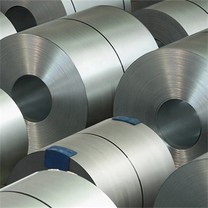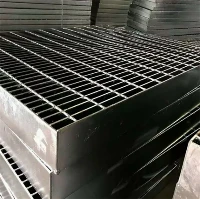
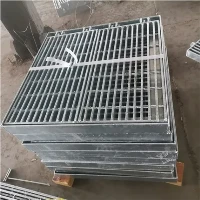


Corrosion resistance mechanism of ZAM steel
Zinc-Aluminum-Magnesium coated steel, also known as ZAM-coated steel, is an innovative steel finish with superior corrosion resistance. Initially, pure zinc alloys were primarily used to enhance the corrosion resistance of metal surfaces. With continuous innovation in steel manufacturing technology, corrosion-resistant coated steels like zinc-aluminum alloys and ZAM alloys continue to emerge in the market, significantly improving the corrosion resistance of steel surfaces.
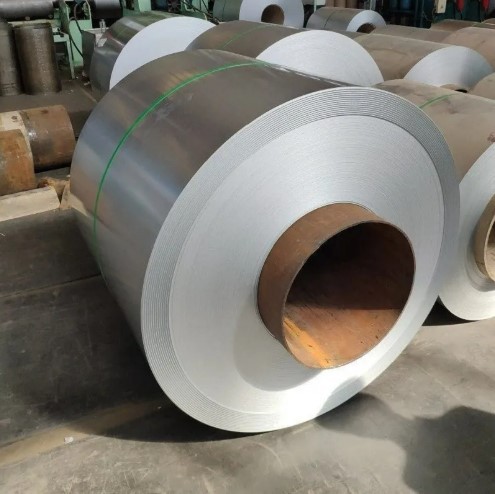
Corrosion resistance mechanism of ZAM steel
ZAM's corrosion resistance mechanism is due to its coating layer of aluminum and magnesium. The blend of Mg and Al creates an enduring protective film on its zinc base, giving protection against corrosion.
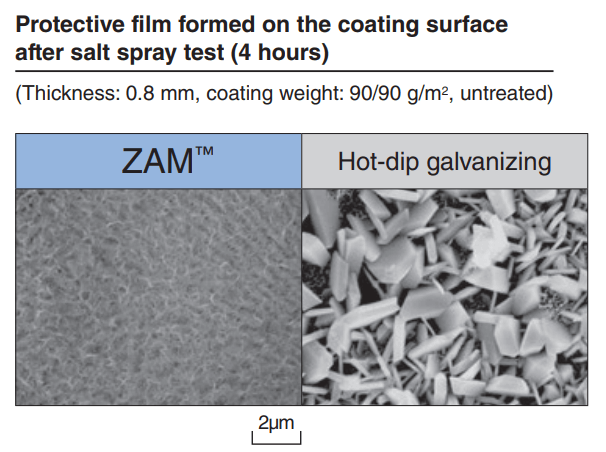
Compared to hot-dip galvanized coating layers, ZAM offers a finer and tighter adhesive property on the substrate. ZAM's coating surfaces block the corrosive action over a long period of exposure to harsh environments.
In a salt spray test that lasted for four hours on both ZAM and hot-dip galvanized steel, ZAM formed a protective film on the coating surface. Take a glimpse at the figure below:
The cut-edge parts of the ZAM steel have superior corrosion resistance. The ends are covered with a fine base that contains a protective film comprising aluminum and magnesium leaching on its coating layer.
The corrosion resistance on the cut edge was based on a test on the steel substrate. The initial exposure period took several weeks, during which there was an initial rust on the exposed cut edge. The rust formed due to oxidation from condensation and rain.
The intermediate exposure period took several weeks to years. During this period, the cut edge resists corrosion due to the fine zinc-based protective film, which has a leaching of zinc, aluminum, and magnesium coating layers. The substrate turns darker to gray-black over the years of exposure to the elements.
Why Choose Zinc aluminum-magnesium Coated Steel?
Zinc aluminum-magnesium coated steel combines the characteristics of steel, zinc, aluminum, and magnesium with excellent corrosion resistance, oxidation resistance, machinability, and abrasion resistance. It can be used as an alternative to stainless steel, prepainted steel, galvanized steel, and zinc-aluminum-plated steel in many applications.
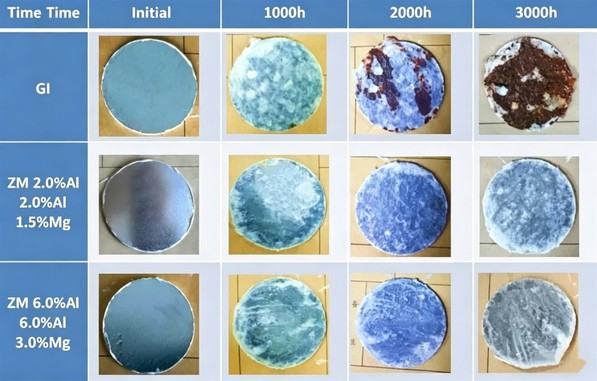
1.Excellent corrosion resistance: The combination of zinc, aluminum, and magnesium provides a strong protective barrier against salt spray for 1500-3000 hours.
2.Self-healing ability: The addition of magnesium enhances the coating's ability to self-heal in the event of scratches or damage, and in the event of scratches, magnesium promotes the creation of an alkaline protective film that slows the expansion of red rust.
3.Acid and alkali resistance: Stable in pH 4-11 range, adaptable to industrial pollution environment.
4.High Temperature Resistance: Aluminum and magnesium components increase the resistance of steel to high temperatures, chemicals and other factors.
5.Reflectivity: Zinc-aluminum-magnesium coated steel reflects heat and reduces energy consumption when used in construction materials.
6.Wear resistance: Aluminum and magnesium increase the resistance of the steel to wear.
Zn-Al-Mg vs Galvanized vs Al-Zn Coated Steel
| Property | Zn-Al-Mg | Al-Zn | Galvanized |
| Coating system | Zn-Al-Mg | Al-Zn-Si | Zn |
| Corrosion resistance | Excellent | Good | Moderate |
| Cut-edge protection | Excellent | Limited | Poor |
| Coastal performance | Excellent | Limited | Poor |
| Service life | Long | Medium | Short |
|
Initial cost |
Medium-High | Medium | Low |
Typical Applications of Zn-Al-Mg Coated Steel
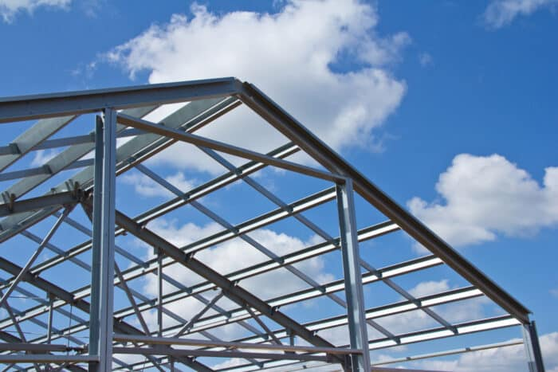
1.Roofing and Cladding (Especially Coastal Areas)
Residential and commercial roofing systems
Standing seam and trapezoidal profiles
Excellent performance in marine environments
2.Industrial and Agricultural Facilities
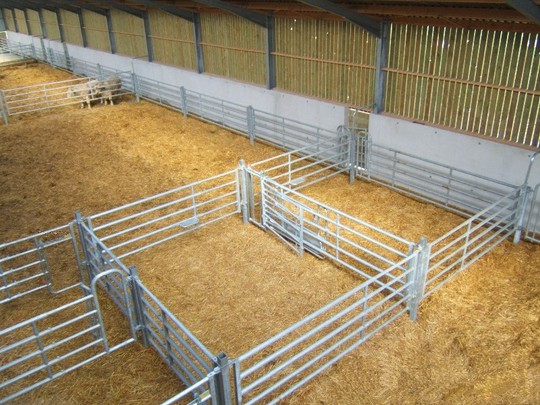
Warehouses and logistics centers
Livestock buildings and fertilizer storage
High resistance to ammonia and chemical exposure
3.Infrastructure and Energy
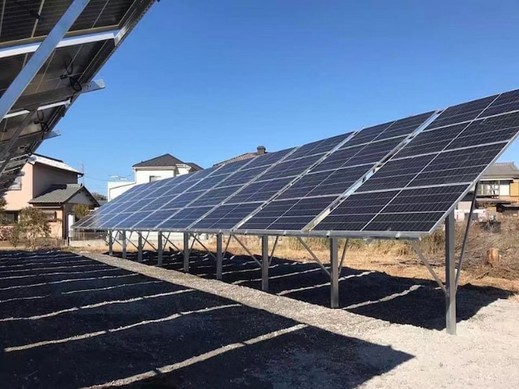
Solar mounting structures
Cable trays and electrical enclosures
Highway and transportation components
4.Manufacturing and Automotive
Structural components
Underbody parts requiring enhanced corrosion resistance

FAQ
1. Is it a viable alternative to stainless steel?
In many moderately corrosive environments, Zn-Al-Mg steel can replace certain grades of stainless steel, providing sufficient protection at a significantly lower material cost.
2. Is Zn-Al-Mg steel more expensive than Galvanized steel?
The initial per-ton price is usually higher than standard GI. However, because it lasts much longer and often allows for a lower coating weight to achieve the same protection, the Life Cycle Cost (LCC) is typically lower.
3. How does it save time in manufacturing?
Since the material can be cut and formed without losing its edge protection (due to the self-healing property), manufacturers can skip the secondary "batch-galvanizing" step after fabrication.
4. Does Zn-Al-Mg steel support sustainability goals?
Yes. Its extended lifespan reduces the frequency of replacement, and the manufacturing process often uses less zinc than heavy-duty galvanizing, resulting in a lower environmental footprint.
5. Does it require special paint or powder coating? No. It provides an excellent substrate for painting. The stable oxide layer ensures high paint adhesion, similar to or better than galvanized steel.