
Solar Mounting Structure Standards Explained
A solar mounting structure is a load-bearing steel structure. It is judged by building codes and steelwork standards, not by rules written for solar products. Those standards fall into four families, each answering a different question. Knowing which family a certificate belongs to is the fastest way to spot what a supplier package is missing.
1. Four families, four questions
|
Family |
Typical standards |
Question it answers |
|
Design loads |
EN 1991-1-4, EN 1991-1-3, ASCE 7, AS/NZS 1170.2, JIS C 8955 |
What forces must the structure take |
|
Member design |
EN 1993-1-3, AISI S100, AS/NZS 4600 |
Will this section carry those forces |
|
Execution and conformity |
EN 1090-1, EN 1090-2, ISO 3834, EN ISO 9606-1 |
Was it made and documented under control |
|
Corrosion protection |
ISO 1461, EN 10346, ASTM A780, ISO 9223 |
How long will the steel survive the site |
2. Design loads come from the site, not from the supplier
Wind and snow are site inputs. A price given without them is an estimate, not a design. The inputs that change the answer are basic wind speed with its averaging period, terrain category, topographic factor, array height and tilt, ground snow load, and module layout.
The code follows the jurisdiction: ASCE 7 in the Americas, EN 1991-1-4 and EN 1991-1-3 in Europe, AS/NZS 1170.2 in Australia and New Zealand, JIS C 8955 in Japan. Wind pressure rises with the square of speed, so one wind zone up adds visible steel to every table.
3. Member design: thin cold-formed sections behave differently
Most solar brackets are cold formed from strip, which puts them under EN 1993-1-3 rather than the hot-rolled parts of Eurocode 3. Thin walls buckle locally and distortionally well before yield, so the code works with effective section properties.
Three things follow. A higher yield grade does not remove a buckling problem. Cold work adds a little strength, but codes treat it conservatively. And the engineer's section goes into the calculation.
4. Execution and conformity: EN 1090 and the execution class
EN 1090-1 is the conformity assessment that lets a load-bearing component carry the CE mark under the Construction Products Regulation; EN 1090-2 sets the technical requirements for steel structures. Behind the mark sits a factory production control system assessed by a notified body, and a Declaration of Performance.
|
Execution class |
Typical scope |
What it adds |
|
EXC1 |
Low-consequence work, small agricultural and temporary structures |
Lightest requirements |
|
EXC2 |
Default for ordinary static structures |
Welding to ISO 3834-2, qualified procedures and welders |
|
EXC3 |
Higher-consequence or fatigue-loaded structures, bridges, cranes |
Tighter welding, more NDT, deeper traceability |
|
EXC4 |
Extreme-consequence structures, specified rarely |
The most onerous regime |
5. Corrosion protection: two standards that get confused
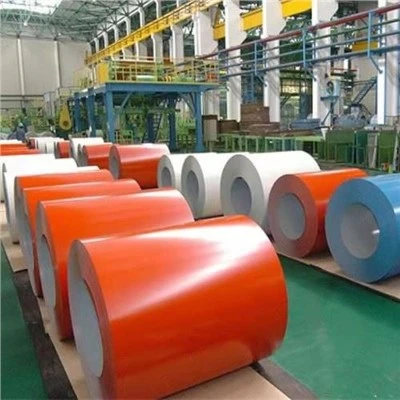
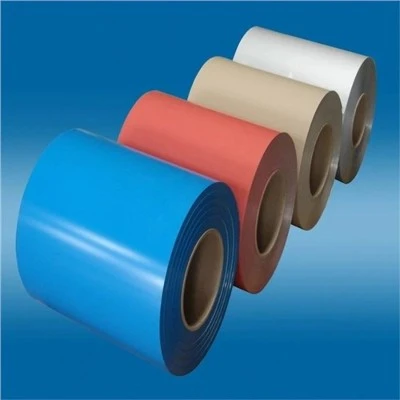
ISO 1461 covers hot-dip coatings on fabricated articles, applied after cutting and welding. EN 10346 covers coil coated on the line before the strip is formed. They are not interchangeable and not measured on the same scale.
A Z275 coil designation means 275 g/m² across both faces together, roughly 19 µm to 20 µm per side. A batch coating under ISO 1461 is specified in tens of microns per surface, with a mean and a local value both reported. Pre-coated coil leaves bare steel at every sheared end and punched hole, so posts, base plates and welded assemblies are dipped after fabrication while rails and purlins come from coil.
The coating has to match the site. ISO 9223 classifies corrosivity from C1 to C5, and a bracket that lasts decades inland can be underspecified a few kilometres from the sea. Damage is repaired under ASTM A780, with the method agreed before production.
FAQ
1.Do solar mounting structures need CE marking in Europe?
Components placed on the EU market are assessed to EN 1090-1 and CE marked. Ask for the Declaration of Performance and the notified body number.
2.Which execution class applies to a solar farm?
The designer sets it, and drawings often omit it. Confirm before pricing, because EXC2 and EXC3 carry different inspection and documentation loads.
3.Is Z275 the same as hot-dip galvanized?
No. Z275 is a coil designation under EN 10346 and is far thinner than a batch coating to ISO 1461 on a fabricated part.
4.Which wind standard applies to my project?
It follows the jurisdiction: ASCE 7 in the Americas, EN 1991-1-4 in Europe, AS/NZS 1170.2 in Australia and New Zealand. Give wind speed and terrain, not just the country.
GNEE STEEL Supplys range by standard system
|
# |
Standard |
Designation system |
Base steel grades |
Coating mass designations |
Alloy system |
|
1 |
EN 10346 (Europe) |
+ZM |
Forming: DC51D+ZM, DC52D+ZM, DC53D+ZM, DC54D+ZM |
ZM100 – ZM450 (g/m², both faces) |
Zn-Al-Mg, low-Al type |
|
2 |
YB/T 4761 (China) |
+ZM |
Same base grade series as EN 10346: DC51D – DC54D (forming) and S220GD – S550GD (structural) |
ZM100 – ZM450 |
Zn-Al-Mg, low-Al type |
|
3 |
YB/T 4634 (China) |
+AZM |
DC51D+AZM, S250GD+AZM and similar |
Per standard |
Zn-55Al-Mg, high-Al type |
|
4 |
JIS G 3323 (Japan) |
-ZAM |
Commercial: SDC-ZAM, SGCH-ZAM |
Per standard |
Zn-Al-Mg |
|
5 |
ASTM A1046/A1046M (USA) |
Type 1 / Type 2 |
Type 1 (low-Al), Type 2 (mid-Al); structural levels HELAS-T 50, HELAS-T 60, HELAS-T 70 |
Per standard |
Zn-Al-Mg |
|
6 |
KS D 3860 (Korea) |
-ZAM |
SDC-ZAM, SGCH-ZAM, SDC340-ZAM, SDC400-ZAM, SDC440-ZAM |
Per standard |
Zn-Al-Mg |
Request Latest Steel Price Today