


A lot of people think that 1020 steel is an easy-find in the market. While it’s one of the most common types of steel, finding the best 1020 steel manufacturer could be the toughest challenge you’ll face.
In this guide today, we will be detailing out everything you need to know about 1020 steel. This is so that you’ll know all the information before you purchase one!
WHAT TYPE OF STEEL IS 1020 STEEL?
You can classify 1020 steel to be a part of the carbon steel family, which has a low profile for hardenability.
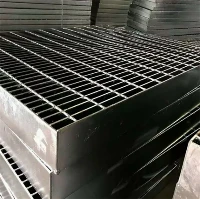
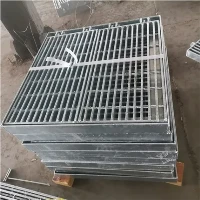
Image of 1020 steels stacked up against each other
This means that its tensile strength isn’t as hard as other types of steel.
Also called C1020, the 1020 steel is usually used in cold-drawn conditions and it’s highly recommended if you need steel that has considerate-to-high levels of weldability and formability.
With its low carbon content, you can consider it as a type of steel that’s flame hardening and induction hardening resistant. Therefore, you can expect it to have 0 reactions to nitriding.
NOTE: You can use 1020 steel as it can respond well and fairly with both heat treatment and cold work. So, you wouldn’t have to think or worry about weldability.
1018 STEEL VS. 1020 STEEL
1018 is next in line for the most popular and the most purchased type of carbon steel.
Like most types of steels, 1018 steel can be made either from hot work or col d work applications.
Similar to 1020, 1018 is from the same family – and the only difference is the carbon content which is 0.18% (compared to 1020 steels that are at 0.20%).
CHEMICAL COMPOSITION OF 1020 STEEL
The chemical composition of 1020 steel is as follows:
| Element or Substance | Content (%) |
| Carbon (C) | 0.17 to 0.230 |
| Iron (Fe) | 99.08 to 99.53 |
| Manganese (Mn) | 0.30 to 0.60 |
| Phosphorus (P) | 0.040 |
| Sulfur (S) | 0.050 |
In the event that you’re wondering what the 1020 steel is made up of, here they are!
To clarify, the “to” is the symbol that the range is not constant as 1020 steel manufacturers usually change up the contents of each of their steels depending on client requirement.
MECHANICAL PROPERTIES OF 1020 STEEL
Mechanical properties are properties that involve a material’s reaction when applied forces.
The mechanical properties of 1020 steel, makes them the more effective in various applications
For you to understand 1020 steel more, here are some of their mechanical properties:
- Tensile Strength (Ultimate) – 394.72 MPa
- Rockwell Hardness B – 64
- Elongation – 36.5% in about 50 mm
- Reduction of Area – 66.00%
- Shear Modulus – 80.0 GPa
IS 1020 STEEL EASILY MACHINABLE AND FORMED?
Machinability is the capability or the capacity of a material or steel to be worked on via a machine.
According the 1020 steel manufacturers and suppliers, you can use 1020 steel for many different machine processes, including but are not limited to milling and tapping, drilling, cutting, and many more!
Because of the fact that it’s malleable and ductile, you will have no problems in forming or in machining it.
WHAT ARE THE SUPPLY FORMS OF 1020 STEEL?
In case you’re wondering about what shapes and dimensions you can purchase 1020 steel is, they include:
Here are some of the supply forms and shapes you can purchase 1020 steel in
- Square bar
- Round bar
- Blocks
- Flat bars
NOTE: Here with us at Waldun Steel, we can produce and manufacture custom forms in varying lengths and measurements!
CAN YOU EASILY WELD 1020 STEEL?
The last two (2) digits of the 1020 steel is “20,” which means that the carbon content of it sits only at 0.20%, which is typically low.
What this means is that the 1020 steel is a type of steel that you can weld easily without experiencing any roadblocks.
CAN 1020 STEEL BE HARDENED?
Just like other types of steels, you can also harden 1020 steels and others of the same family.
You can harden and quench 1020 steel, too!
In fact, you will be bale to do so by heating them in temperatures ranging from 1,500 to 1,600 degrees Fahrenheit (815 to 871 degrees Celsius)


