


 Definition of Stainless Steel
Stainless steel is a high alloy steel that is resistant to corrosion. It has a beautiful surface and does not have to undergo surface treatment such as colour plating or painting, so many machine shops do not make any paint treatment in order to show that theirs is stainless steel, while black material (so-called black material is the name of the general steel) is required to carry out anti-rust treatment.

Simple classification of stainless steel
Stainless steel can be roughly divided into three categories: 200 series, 300 series and 400 series, of which 300 series is the most commonly used, 200 series and 400 series is to some extent a substitute for 300 series, while strictly speaking 400 series is not called stainless steel, called stainless iron, because it does not contain nickel elements, so with a magnet can be attracted. The 200 and 300 series are nickel-free, so they are not magnetic and cannot be attracted with a magnet.
304 is the most common variety in the 300 series, so generally from 304 price changes can be judged from the whole stainless steel price trend. 200 series contains less nickel, 400 series does not contain nickel, 300 series contains the most nickel, so the most affected by nickel prices is the 300 series.
300 series can be briefly divided into 304, 304L, 316, 316L, 321, 309S, 310S and so on, the basis for differentiation is the content of various metal elements are different, the content of different stainless steel characteristics are not the same, 304 and 304L difference is the difference in carbon (C) content, with L is said to contain low carbon, also known as low carbon, 316 and 316L difference is also The same.
Classification of stainless steel forms
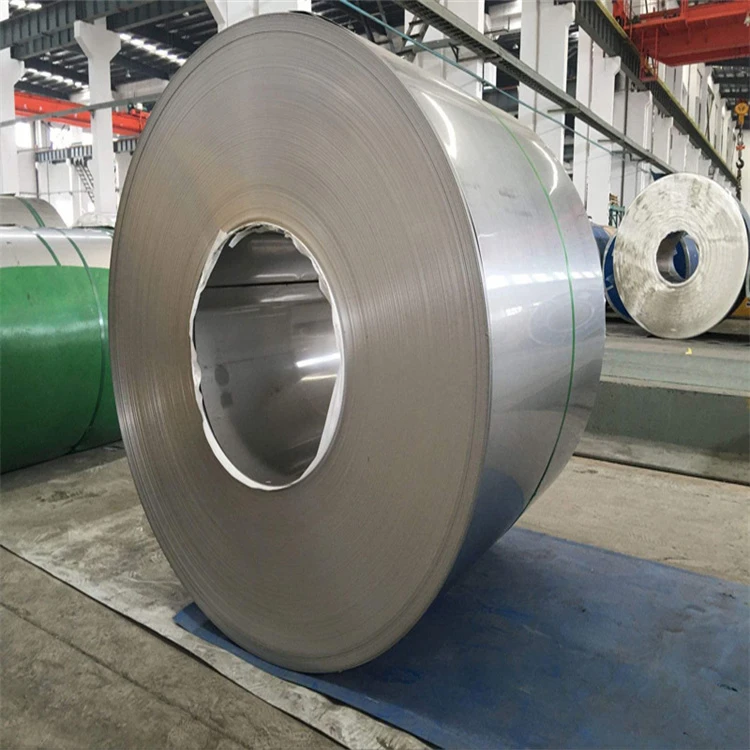
Stainless steel can be divided into five categories: coils, plates, profiles, tubes and components, the most important being coils and plates. Profiles are a variety of different shaped materials made from plates, with angles, flat bars, I-beams and channels. Steel pipe mainly refers to seamless steel pipe, and seamless steel pipe is the opposite of welded pipe, the difference is whether or not a forming. Parts are mainly elbows and flanges and other small items.
Coil and plate is actually the same, the factory form is not the same, coil is a roll of a roll, plate is a sheet, if the factory is a plate, also called the original plate, generally thick plate, because very thick, it is impossible to form a volume, generally more than 16 mm can not be rolled.
There are volumes, there are plates, many times is the plate, volume and plate prices are not the same, if the purchase of volumes, is calculated according to the actual weighing, so the price is high, the plate is calculated according to the theory, the price is low, the reason is that there is a lower difference, such as 10mm thick may actually be 9.6mm, which will have a price difference in the middle.
Stainless steel plate according to the rolling mill (mill is the name of the machine rolling plate) rolling process is different, divided into hot-rolled and cold-rolled, hot-rolled usually marked as NO.1 cold-rolled marked as 2B or BA (BA than 2B surface good, to bright, close to the mirror, the best is the mirror, mirror no spot, are required to process), such as 304 many times is the purchase of the plate, that means the volume must be flattened by machine into the form of plate , this machine is the flattening machine. Through the flattening machine flattening can be opened into different lengths, if not the conventional length is called fixed open, meaning fixed open size, because customers according to the actual needs, often put forward different length requirements, this time the volume becomes important, the conventional plate will not meet the requirements.

Domestic cold-rolled is generally below 3mm, hot-rolled is generally above 3mm. 3mm thickness is both hot-rolled and cold-rolled, but imported cold-rolled sheets can reach thicknesses below 4mm or even below 6mm. Hot rolled 3mm to 12mm plate is called medium plate, 12mm or more is called thick plate, can be thicker than 120mm, and called hot rolled medium thick plate, while cold rolled is cold rolled thin plate.


