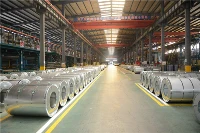
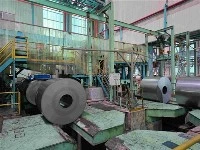

Metal plates have been used as roofing materials for hundreds of years. The large number of metal materials used as roofing materials is mainly due to the rapid development of the world's metallurgical industry since the 1960s, which can produce various specifications and meet quality requirements. , And reduce costs.
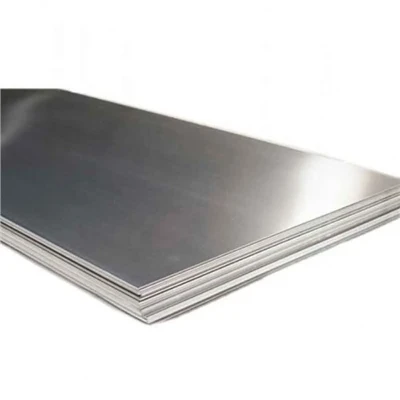
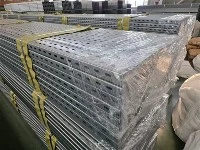
Metal roofing materials mainly include galvanized steel plate, stainless steel plate, aluminum alloy plate, copper plate, zinc copper titanium plywood and pure titanium plate. The advantages of sheet metal roofing are simple construction, fast speed, good waterproof performance, and reusability. In addition to being able to withstand the highest and lowest temperatures that the earth's climate can produce, it is rarely affected by the stress caused by weather and roof deformation when used as a roofing material. People can also apply various colors of paint according to the situation.
The aluminum-magnesium-manganese alloy board roof/curtain wall system mainly uses 3000 series of aluminum-manganese (aluminum-manganese) alloys. The elongation, hardness, tensile strength, yield strength and other indicators of the 3000 series of aluminum-manganese alloys are very suitable for roof crimping, Processing of rolling equipment. Therefore, it is widely used in exterior maintenance projects such as roof/wall systems, and with various painting systems and coating processes, the appearance of the building becomes colorful, and the corrosion resistance of the aluminum alloy itself is increased.
The minimum thickness of the aluminum material used for the roof is 0.7mm. When the thickness of the aluminum material is 1mm, its weight is 2.7 kg/m2, and when the thickness is 0.7mm, the weight of the aluminum material is 1.89 kg/m2. The length of the coil is not limited.
Its main characteristics are: density of 2.7, melting point of 658, linear expansion coefficient of 0.0000023 at a temperature of 20-100 degrees, breaking load coefficient of 8-12 kg/mm2 (varies according to the hardness of the material), and elongation of 10 ~40%, the thickness is 0.7~1.2mm. When it is aluminum corrugated board, the thickness can be reduced to 0.6mm. In addition to crimping and rivet fixing, welding can also be adopted.
1. Durability comparison: Aluminum-magnesium-manganese alloy can form an aluminum oxide film with the atmosphere to prevent further corrosion. Generally, it has a coating warranty of 15-20 years when used in civil buildings. The design service life of the building is more than 50 years. Generally, a 25-year product warranty is guaranteed; color steel plates are easily corroded and rusted under the erosion of moist air, rain and snow, and cause fracture accidents, especially the rivets and joints.
2. Weight comparison: aluminum-magnesium-manganese alloy is light in weight (density is 2730 kg/m²); color steel plate is relatively heavy (density is 7850 kg/m²)
3. Comparison of strength and stiffness: The aluminum alloy of aluminum-magnesium-manganese alloy contains magnesium and manganese content, so it has certain strength and rigidity. However, the internal stress, hardening, and strength of aluminum alloy plates have no obvious yield point, which is not as good as color steel; color steel plates have better strength and rigidity and are not easy to deform.
4. Appearance comparison: aluminum-magnesium-manganese alloy can be divided into non-painted (hammer pattern, embossing, pre-passivated alumina surface treatment, etc.) and painted (PVDF, SMP, PE, etc.); color steel plate can be divided into Non-painted (hot-dip aluminum-zinc alloy steel strip: bare board) and painted (PVDF, SMP, PE, HDP, etc.).
5. Lightning protection performance: The thickness of aluminum-magnesium-manganese alloy is generally 0.7mm and 0.9mm, which can be directly used as lightning protection air-termination device (National Code "Code for Building Lightning Protection Design" GB50057) to avoid perforation in the roof; color steel plate is generally 0.5 mm thick galvanized and galvanized steel sheets cannot be directly used as lightning arresters, and additional lightning arresters (such as lightning rods) must be erected.
6. Safety and fire protection: Aluminum-magnesium-manganese alloy has a low melting point (660 degrees Celsius). The high temperature resistance is poor, and the strength is quickly lost when the temperature is above 150 degrees. In the event of a fire, the roof is easily burned through, causing the fire to spread outwards instead of inward and laterally, which helps firefighters to extend the fire hose from the top; the melting point of color steel plate is high (1515 degrees Celsius).
7. Forming: Aluminum-magnesium-manganese alloy has good weldability, high plasticity, under low temperature environment, the strength and ductility of aluminum alloy is improved, and it has good low-temperature working performance; color steel plate is prone to cold brittleness at low temperature .
8. Cost-effective: Aluminum-magnesium-manganese alloy is more cost-effective: light weight, waterproof, easy to bend arc, and good stereoscopic visual effect; color steel plate has a lower cost performance: heavy weight, poor waterproof, poor rigid bending arc, artistic effect Bad.