


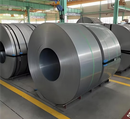
Duplex Stainless Steel (DSS) refers to stainless steel with ferrite and austenite each accounting for about 50%. Generally, the content of the smaller phase needs to be at least 30%. In the case of low C content, the Cr content is 18%~28% and the Ni content is 3%~10%. Some steels also contain alloying elements such as Mo, Cu, Nb, Ti, and N.
Duplex stainless steel combines the advantages of austenite and ferrite and minimizes the disadvantages of both phases. The composition of duplex stainless steel with the best performance is that the content of ferrite is between 60% and 40%, and the content of austenite is between 40% and 60%. A substantial reduction in any of the components will cause the performance of duplex steel to deteriorate. weaken.


Corrosion resistance of duplex stainless steel
Duplex stainless steels exhibit high corrosion resistance in the vast majority of environments where standard austenitic stainless steels are used. Their relatively high chromium, molybdenum and nitrogen contents give them good resistance to chloride pitting and corrosion. Crevice corrosion performance, the dual-phase structure is an advantage in environments where chloride stress corrosion cracking may occur.
If the microstructure of duplex stainless steel contains at least 30% ferrite, its resistance to chloride stress corrosion cracking is much better than austenitic stainless steel 304 or 316.
Duplex stainless steels are usually distinguished based on the pitting resistance equivalent number PREN value. The pitting corrosion resistance equivalent number describes the resistance of stainless steel to localized corrosion in a chlorine-containing environment.
The role of alloying elements in duplex stainless steel
Chromium
The chromium content in steel must be no less than 10.5% to form a stable chromium-containing passivation film to protect the steel from atmospheric corrosion. The corrosion resistance of stainless steel increases with increasing chromium content. Chromium is a ferrite-forming element. Adding chromium to steel can promote the formation of ferrite with a body-centered cubic structure. When the chromium content in steel is higher, more nickel needs to be added to form an austenite or dual-phase (ferrite-austenite) structure. Higher chromium amounts can also promote the formation of intermetallic phases. Austenitic stainless steels have a chromium content of at least 16% and duplex stainless steels have a chromium content of at least 20%. Chromium can also increase the oxidation resistance of steel at high temperatures. This role of chromium is very important. It affects the formation and removal of oxide scale or temper color after heat treatment or welding. Pickling and removing temper color from duplex stainless steels is more difficult than from austenitic stainless steels.
Molybdenum
Molybdenum can improve the resistance of stainless steel to pitting and crevice corrosion. When the chromium content in stainless steel is at least 18%, molybdenum is three times more resistant to pitting and crevice corrosion than chromium in a chloride ion environment. Molybdenum is a ferrite-forming element and also increases the tendency of stainless steel to form intermetallic phases. Therefore, austenitic stainless steels typically have a molybdenum content of less than about 7.5% and duplex stainless steels have a molybdenum content of less than 4%.
Nitrogen
Nitrogen improves the resistance of austenitic and duplex stainless steels to pitting and crevice corrosion. It can also significantly increase the strength of the steel. In fact it is the most effective solid solution strengthening element and low cost alloying element. The improvement in toughness of nitrogen-containing duplex stainless steel is due to its higher austenite content and less intermetallic phase. Nitrogen does not prevent the precipitation of intermetallic phases, but it can delay the formation of intermetallic phases, allowing sufficient time for processing and manufacturing of duplex stainless steel. Nitrogen is added to highly corrosion-resistant austenitic and duplex stainless steels with high chromium and molybdenum contents to counteract their tendency to form sigma phases.
Duplex stainless steels generally have nitrogen added and the nickel content adjusted to achieve the proper phase balance. The dual-phase structure can be obtained by balancing the ferrite-forming elements chromium and molybdenum with the austenite-forming elements nickel and nitrogen.
Nickel
Nickel is an element that stabilizes austenite. Nickel promotes the transformation of the crystal structure of stainless steel from a body-centered cubic structure (ferrite) to a face-centered cubic structure (austenite). Ferritic stainless steel contains little or no nickel, duplex stainless steel contains low to moderate nickel, such as 1.5% to 7%, and 300 series austenitic stainless steel contains at least 6% nickel. The addition of nickel retards the formation of harmful intermetallic phases in austenitic stainless steels, but the retarding effect of nickel in duplex stainless steels is far less effective than nitrogen. The face-centered cubic structure gives austenitic stainless steel excellent toughness. Nearly half of duplex stainless steel is austenite, so the toughness of duplex stainless steel is significantly higher than that of ferritic stainless steel.
Application areas of duplex stainless steel
Duplex stainless steel is a versatile material both in highly corrosive environments and as engineering materials for stainless steel structures.
Its uses include:
Paper industry
Chemical and petrochemical industry
Hydrometallurgy
Organic acids and caustic media
pollution control equipment
Chemical storage tank
Offshore and coastal applications
Brewery plumbing fixtures


