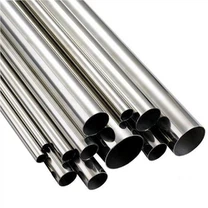
Stainless Steel Plate
Standard: 302, 304, 304L, 309, 316, 316L, 317, 321, 330, 403, 409, 416, 440C, Duplex 2507
Sizes: from 3/16" to 2" thick x 48" or 60" wide x 96/120/144 lengths
Chemical composition, mechanical properties, weldability and corrosion resistance provide the best all-round performance stainless steel plate at relatively low cost.
Stainless Steel Plate Stock:
302 Stainless Steel Plate303 Stainless Steel Plate304 Stainless Steel Plate
304L Stainless Steel Plate304H Stainless Steel Plate309 Stainless Steel Plate
309S Stainless Steel Plate310 Stainless Steel Plate310S Stainless Steel Plate
310H Stainless Steel Plate316 Stainless Steel Plate316L Stainless Steel Plate
317/317L Stainless Steel Plate317LMN Stainless Steel Plate321 Stainless Steel Plate
321H Stainless Steel Plate330 Stainless Steel Plate347 Stainless Steel Plate
347H Stainless Steel Plate904L Stainless Steel Plate403 Stainless Steel Plate
405 Stainless Steel Plate409 Stainless Steel Plate410 Stainless Steel Plate
410S Stainless Steel Plate410/HT Stainless Steel Plate416 Stainless Steel Plate
416HT Stainless Steel Plate420 Stainless Steel Plate422 Stainless Steel Plate
430 Stainless Steel Plate440C Stainless Steel PlateDuplex 2205 Stainless Steel
Duplex 2304 Stainless SteelDuplex 2507 Stainless Steel
Chemical and Mechanical Properties of Stainless Steel Plate:
| Typical chemical requirements | ||||
|---|---|---|---|---|
| 304 | 304L | 316/316L | 321 | |
| Carbon, Max % | 0.07 | 0.03 | 0.03 | 0.08 |
| Manganese, Max % | 2 | 2 | 2 | 2 |
| Phosphorus, Max % | 0.045 | 0.045 | 0.045 | 0.045 |
| Sulphur, Max % | 0.03 | 0.03 | 0.03 | 0.03 |
| Silicon Max | 0.75 | 0.75 | 0.75 | 0.75 |
| Chromium range | 17.5-19.5 | 17.5-19.5 | 16-18 | 17-19 |
| Nickel range | 8.0-10.5 | 80.-12 | 10-14 | 9-12 |
| Nitrogen Max | 0.1 | 0.1 | 0.1 | 0.1 |
| Mechanical Properties | ||||
| Tensile Min | 75 ksi | 70 ksi | 75 ksi | 75 ksi |
| Yield Min | 30 ksi | 25 ksi | 25 ksi | 30 ksi |
| Elongation Min | 40% | 40% | 40% | 40% |
| Hardness Max | 95 HRB | 95 HRB | 95 HRB | 95 HRB |
Stainless steels are a family of iron based alloys that contain a minimum of 10.5% chromium (CR). The presence of chromium creates an invisible surface film that resists oxidation and makes the material passive or corrosion resistant. There are multiple families of stainless steel which are designed for various applications and uses. Stainless grades can be further modified to meet various processing, corrosion, temperature and strength conditions.
Taking 304 and 304L stainless steel plates as an example, they are part of the austenitic family of stainless steel and they are one of the most versatile and widely used varieties of stainless plate. They are a relatively low cost stainless product and used in a variety of applications. 304 grades have excellent low temperature properties and respond well to hardening by cold working. 304 grades have good welding characteristics and post weld annealing is not normally required to restore performance. 304 SS has excellent corrosion resistance in a variety of different media. Typical specifications for 304 and 304L are ASTM A-240, ASME SA -240 and A666.
Features of ANSON Stainless Steel Plates
Uniform quality
An integrated quality system from steel making through the final process ensure uniform quality in products with excellent formability and corrosion resistance.
Attractive Finishes
To produce attractive stainless steel finishes are kept in optimum condition at all times, while automated control equipment is used to guarantee high dimensional accuracy. The supreme quality and beautiful gloss of ANSON 304L has won wide customer acclaim.
Products for Every Application
ANSON offers a wide range of stainless steel types. ANSON has the ability to combine most stainless steel manufactures in China. If you have any specific requirement, come to us and fine better solutions.
Excellent Corrosion Resistance
In particular, the atmospheric corrosion resistance is noticeable and the welded area is good.
Price Competitiveness and Stability
Without the addition of nickel, the price of stainless plate is cheaper, even when the price of raw materials of nickel and molybdenum soars.
Good Formability
Equal or better formability, compared with other conditional stainless steel.
Excellent Physical Properties
ANSON stainless steel possesses higher thermal conductivity, smaller thermal expansion coefficient, less material weight for same size than other suppliers.
Heat Resistance
304 has good resistance to oxidation in intermittent service up to 870°C and in continuous service to 925°C. However, continuous use at 425-860°C is not recommended if corrosion resistance in water is required. In this instance 304L is recommended due to its resistance to carbide precipitation.
Where high strength in required at temperatures above 500°C and up to 800°C, grade 304H is recommended. This material will retain aqueous corrosion resistance.
Fabrication
Fabrication of all stainless steels should be done only with tools dedicated to stainless steel materials. Tooling and work surfaces must be thoroughly cleaned before use. These precautions are necessary to avoid cross contamination of stainless steel by easily corroded metals that may discolor the surface of the fabricated products.
Cold Working
304 stainless steel readily work hardens. Fabrication methods involving cold working may require an intermediate annealing stage to alleviate work hardening and avoid tearing or cracking. At the completion of fabrication a full annealing operation should be employed to reduce internal stresses and optimize corrosion resistance.
Hot Working
Fabrication methods, like forging, that involve hot working should ovvur after uniform heating to 1149-1260°C. The fabricated components should then be rapidly cooled to ensure maximum corrosion resistance.
Heat Treatment
304 stainless steel cannot be hardened by heat treatment. Solution treatment or annealing can be done by rapid cooling after heating to 1010-1120°C.