1 What is silicon steel?
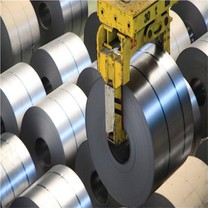
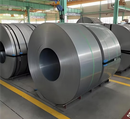
Silicon steel, also called "electrical steel", is a ferrosilicon soft magnetic alloy with extremely low carbon content. The addition of silicon can not only increase the resistivity and maximum magnetic permeability of iron, but also reduce core loss (iron loss), coercive force, and magnetic aging. Generally used in the iron cores of various motors and transformers, it is an important soft magnetic alloy that is indispensable in the power, electronics and military industries.
2 Classification of silicon steel
(1) According to the production process: it can be divided into hot-rolled and cold-rolled silicon steel. Hot-rolled silicon steel has low availability and high energy loss, and has been gradually phased out. Cold-rolled silicon steel is divided into oriented silicon steel and non-oriented silicon steel according to the orientation of the internal grains.
(2) According to the different silicon content, electrical steel is divided into two types: low silicon wafers (medium and low grades) and high silicon wafers (high grades). Low silicon wafers have a certain mechanical strength and are mainly used to manufacture motors, commonly known as motor silicon steel sheets; high silicon wafers have good magnetism but are brittle and are mainly used to manufacture transformer cores, commonly known as transformer silicon steel sheets.
3 The difference between non-oriented silicon steel and oriented silicon steel
The grains of oriented silicon steel are basically in one direction and have a high silicon content. They are mainly used in transformer manufacturing. Non-oriented silicon steel has disorderly grain distribution and low silicon content, and is mainly used in motor manufacturing. The silicon content is generally set at 3%; cold-rolled silicon steel is divided into cold-rolled non-oriented silicon steel and cold-rolled oriented silicon steel.
(1) The production process requirements of cold-rolled non-oriented silicon steel are relatively low, and the silicon mass fraction is between 0.5% and 3.0%. The thickness of the finished product after cold rolling is generally 0.35 and 0.5mm thick steel strips. Its Bs is higher than that of oriented silicon steel, with uniform thickness, high dimensional accuracy and smooth surface, which improves the filling factor and the magnetic properties of the material.
(2) The silicon mass fraction of cold-rolled oriented silicon steel is above 3.0%, and the carbon mass fraction is 0.03%-0.05%. Steels contain low oxide inclusions and require inhibitors. Compared with cold-rolled non-oriented silicon steel, oriented silicon steel has lower loss, strong magnetic directionality, and superior high magnetic permeability and low loss characteristics in its rolling direction. Cold-rolled oriented silicon steel, also known as cold-rolled transformer silicon steel, is mainly used in transformer manufacturing.
(3) Cold-rolled oriented silicon steel can also be divided into two categories: common oriented silicon steel (CGO) and high magnetic induction oriented silicon steel (Hi-B). High magnetic induction cold-rolled oriented silicon steel is single-oriented steel strip. It is mainly used to manufacture various electromagnetic components such as chokes and transformers in electronic instruments.