

Why choose hot-dip galvanizing process?
From an environmental perspective, the main pollutants in hot-dip galvanizing are waste acids from pickling workpieces. Hot-dip galvanizing will emit less pollutants. The type and quantity of pollutants emitted by cold-dip galvanizing greatly exceed that of hot-dip galvanizing. The pollutants in cold galvanizing mainly include waste acid from pickling workpieces, waste electroplating liquid, waste passivation liquid, etc. Hot-dip galvanizing is a chemical treatment and an electrochemical reaction. Cold galvanizing is a physical treatment, it just brushes a layer of zinc on the surface, so the zinc layer is easy to fall off.
Hot dip galvanizing is often used in building construction. Continuous hot-dip galvanizing process: steel→heating→cooling to galvanizing temperature→galvanizing→cooling Cold galvanizing is electro-galvanizing, which is only 10-50g/m2, and its corrosion resistance is much worse than hot-dip galvanizing. . The price of electro-galvanizing is relatively cheaper.
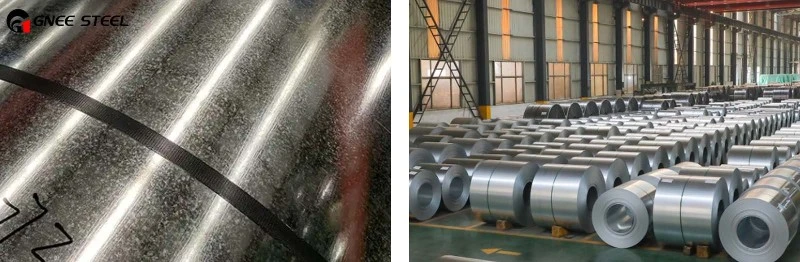
Hot-dip galvanizing mainly involves galvanizing the surface of the steel body under hot-dip conditions. Its adhesion is relatively strong and is not easy to fall off. Although hot-dip galvanized pipes will also rust, they can meet the requirements for a long period of time. Technical and hygienic requirements. Hot-dip galvanizing is also called hot-dip galvanizing. It melts zinc ingots at high temperatures, puts in some auxiliary materials, and then immerses the metal structural parts in a galvanizing bath, using a layer of metal to adhere to it. zinc layer. The main advantages of galvanizing are its strong anti-corrosion ability and good adhesion and hardness of the galvanized layer.