


Compared with hot-rolled silicon steel sheets, an obvious feature of cold-rolled silicon steel sheets is that they are coated with a layer of coating on the surface during the production process. This coating not only has higher insulation properties, but also has corrosion resistance and processing properties. , good heat resistance, the surface coating of oriented steel has the effect of improving magnetism, and the interlayer insulation of the finished hot-rolled silicon steel sheet is mainly completed by dipping in varnish and drying after pickling. Let me give you the coating process of silicon steel:
The insulating coating currently used on non-oriented silicon steel is an inorganic-organic hybrid insulating coating, referred to as semi-organic coating (T4 chromate-organic resin): T0: water, boric acid (H3BO3), chromic anhydride (CrO3), additives, etc. ;T0 specific gravity (1.161~1.175g/cm3, 25℃).
Main reasons affecting coating fluid quality
⑴ Influence of temperature
As the temperature increases, the effective storage time of T4 coating solution becomes shorter, that is, 5 days at 10°C, 3 days at 20°C, and 2 days at 30°C.
⑵ Influence of time
At the same temperature, as time goes by, the color of the coating liquid becomes darker and darker, and finally it deteriorates and is scrapped. Due to the influence of temperature on the coating liquid, the coating system has a separate refrigeration system, using water as the medium and a circulating pump. Pass cold water into various cooling points (including circulation tanks and storage tanks). There are serpentine tubes distributed in the tanks. Cold water is continuously circulated in the tubes to keep the temperature of the coating liquid at <20°C. This ensures the freshness of the coating fluid.
Due to the influence of time on the coating liquid, the coating liquid should be used up as soon as possible during production, and then fresh coating liquid should be replenished to prevent the coating liquid from deteriorating and causing poor coating; when the unit encounters a failure or maintenance, the coating should be stopped for a long time The system should promptly drain the coating liquid in the circulating tank and storage tank and flush them with water to prevent the coating liquid from clumping and clogging the pump and pipes after deterioration.

Coating amount control
Coating amount: The weight of the coating applied on the steel strip per unit area, in g/m2. In order to ensure good overall performance of the coating, various coatings must be tested in advance to determine the best coating. The target value and control range of the quantity.
T4 coating coating amount range:
Low grade (W23~W30): 0.8~1.2g/m2 target value 1.0g/m2
Medium and low grades (W18~W20): 1.2~1.8g/m2 target value 1.5g/m2
Factors affecting coating amount:
⑴ The specific gravity of the coating liquid: the higher the specific gravity, the higher the coating amount;
⑵ Unit speed: Since the coating roller is a following roller, the coating amount is proportional to the unit speed. The higher the speed, the thicker the coating amount;
⑶ The amount of reduction of the coating roller: The amount of coating is inversely proportional to the amount of reduction of the coating roller. The greater the amount of reduction, the thinner the coating amount;
⑷ Roller type of coating roller: The coating roller is made of acid-resistant rubber. Roller type factors include the hardness, diameter, groove angle, depth and number of teeth per unit length of the rubber roller. Large hardness, small diameter, angle Larger, deeper grooves and more teeth will result in a thicker coating.
Principles for equipping coating rollers
⑴ Try to choose the same type of coating roller according to the roller type factor;
⑵ Due to gravity, the coating amount on the lower surface is thin. Therefore, a coating roller with high hardness, small roller diameter, and deep grooves should be used as the lower roller;
⑶ When replacing the coating roller, it must be replaced in pairs.
Adjustment of spray angle and spray volume of coating fluid
Among them, the spray directions of c and e are correct, and other directions will cause coating defects.
The principle of adjusting the spray angle and spray volume of the coating liquid should ensure that the coating liquid is sprayed onto the coating roller smoothly, evenly and without interruption. It is also necessary to prevent excessive spray pressure of the coating liquid or incorrect spray direction of the coating liquid header from splashing of the coating liquid. To generate bubbles, it is also necessary to prevent the coating liquid spray pressure from being too small or the spray direction of the coating liquid header being incorrect, resulting in no coating liquid spraying out or failure to spray onto the coating roller, resulting in coating defects such as missed coatings and spots.
Causes and Countermeasures of Main Defects in Coatings
① Missing coating:
Cause: Due to clogging of nozzles, headers, circulation pumps and other equipment, incorrect spray angle pressure of coating fluid or lack of coating fluid, etc.
Countermeasures: Check frequently during operation, clear and clean the header in time, and adjust the header injection pressure and angle.
② Double lines:
Causes: The specific gravity of the coating liquid is too high; the viscosity of the coating liquid is high; the hardness of the coating roller is high; the pressure of the coating roller is small.
Countermeasures: Strictly standardize the liquid preparation operation, and control the proportion of the coating liquid within the target range according to the process; reasonably control the temperature of the coating liquid. If the temperature is high, the coating liquid will age easily, but if the temperature is too low, the viscosity of the coating liquid will be high and the diffusion will be slow during coating, causing Double lines (10-20°C is optimal); the hardness of the coating roller is high, and the coating is prone to produce double lines. Therefore, a coating roller with a lower hardness should be selected according to the speed of the unit, and the coating roller should be adjusted reasonably according to the actual coating situation. Pressure amount.
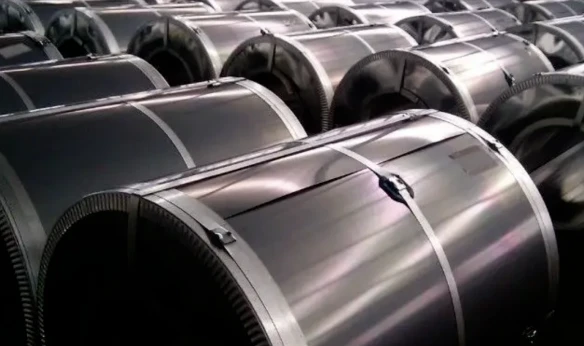
③ Uneven color tone:
Causes: Poor alkali cleaning, oil stains on the steel plate; uneven coating; aging of the coating roller; improper drying and firing temperature control, etc.
Countermeasures: Improve the quality of alkali cleaning; strictly control the coating amount according to the coating standards, and adjust the coating roller reduction amount in a timely manner to ensure that the coating amount on the entire steel plate surface is controlled within the target range and the deviation is as small as possible, thereby ensuring the coating quality. Uniform; if the aging phenomenon of the coating roller is found, the coating roller should be replaced in time, and the drying and sintering furnace temperatures should be controlled promptly and reasonably according to changes in unit speed.


