


The acid-free pickling process of cold rolled strip steel is as follows:
Before cold rolling, the strip must be pickled without acid to remove the oxide scale on the surface of the raw steel coil that is harmful to cold rolling, because the oxide scale will damage the surface of the roll during the cold rolling process, causing surface defects of the strip.
At present, strip steel is usually picked using continuous hydrochloric acid. Taking continuous pickling as an example, strip steel is continuously pickled through several acid-free pickling tanks. In order to make the process on the production line continuous, the tail of the previous hot-rolled steel coil and the head of the next steel coil are welded. After pickling, the steel strip is cut and wound according to the required roll weight and roll diameter.
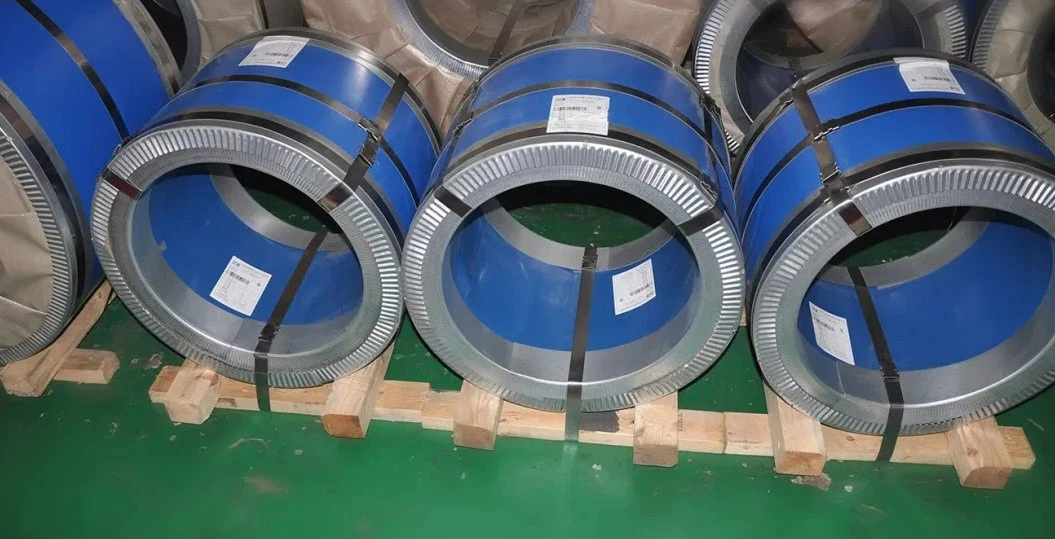
In addition to removing iron oxide scale on the surface of strip steel, the continuous acid-free pickling device also has the following functions:
(1) Trim the side of the strip with disc shears.
(2) Adjust the quality of steel coils, divide large hot-rolled steel coils into small coils according to production needs, or combine several small coils into one large coil to increase the output of the cold rolling mill.
(3) Check and eliminate strip surface defects that are harmful to subsequent processes.
(4) Apply a layer of oil on the surface of the acid-free pickled strip steel to prevent rust and lubricate.
The continuous pickling device is divided into three parts according to the nature of the work:
Entrance section: blanking, uncoiling, iron oxide scale breakage on the strip surface, correction, head cutting, tail cutting, neat welding;
Pickling part: pickling, hot and cold water rinsing and drying;
Exit section: shearing, oiling and coiling.

Acid-free pickling process:
The acid-free pickling section can use sulfuric acid pickling and hydrochloric acid pickling, but hydrochloric acid pickling has more advantages, so we use the pickling mechanism of hydrochloric acid to explain.
Hydrochloric acid solution can quickly dissolve various iron oxide scales, and the pickling reaction can proceed from the outer layer to the inner layer. Hydrochloric acid pickling is mainly chemical corrosion, and hydrochloric acid pickling has very weak corrosion on the metal substrate.
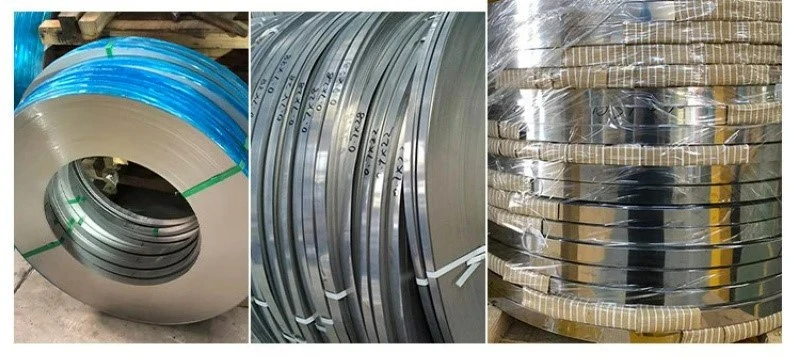
Compared with sulfuric acid pickling, acid-free pickling has the following advantages:
(1) Hydrochloric acid can completely dissolve 3 layers of iron oxide scale without pickling residue. When pickling with sulfuric acid, the acid tank must be cleaned frequently and the mucus neutralized; sulfuric acid cannot easily remove Fe2O3 pressed into the surface of the plate, resulting in corresponding surface defects.
(2) Hydrochloric acid basically does not corrode the base metal. In this way, after washing with hydrochloric acid, the board surface will be smooth and silver, with no traces of pickling or pickling; the iron consumption of hydrochloric acid pickling is 20% lower than that of sulfuric acid pickling;
During the acid-free pickling process, hydrogen gas is produced when metallic iron is dissolved in the acid solution, and the hydrogen gas diffuses to the surface of the steel plate, causing hydrogen embrittlement, while hydrochloric acid pickling rarely produces this defect.
(3) Iron oxide is easy to dissolve and remove, so it is not easy to form acid spots on the surface. This is also one of the reasons why the surface of hydrochloric acid pickled plates is particularly smooth. Iron sulfate is often used because it forms an insoluble hydrate that causes acidic spots on the circuit board surface.
(4) The pickling rate of hydrochloric acid is very high, especially at high temperatures. The pickling time of hydrochloric acid is very different from that of sulfuric acid.


